
8 Science Fiction Films that Predicted the Future
Science fiction movies are very difficult to pull off successfully. Mainly because they have to rely on a convincing presentation of the future, social dynamics, and gadget galore. Most, however, end up looking already dated within a few years since their release (Virtuosity (1995), Johnny Mnemonic (1995)) their ideas are considered banal and bourgeois. A handful of others, however, remain timeless (Blade Runner (1982), The Matrix (1999)) due to a future presentation whose pieces become slowly our contemporary present much to a thunderous applause from the so called intellectual class, the rich elite, and the lazy bums who believe automation would solve everything and improve their below-average creativity.
Philip K. Dick has been spot on in his writings including the one Blade Runner was based on (Do Androids Dream of Electric Sheep?). Considering today’s accelerated process to replace (or replicate) human thought, control all sorts of emotional outbursts, and hide behind the mask of political correctness or free speech, it is fascinating to explore which science fiction films are relevant thematically and visually. Has their dystopia become a chunk of our modern world and if so, how? How about the fictional technology? Did they indeed predict what humans would do a few decades later?
8.Blade Runner (1982)
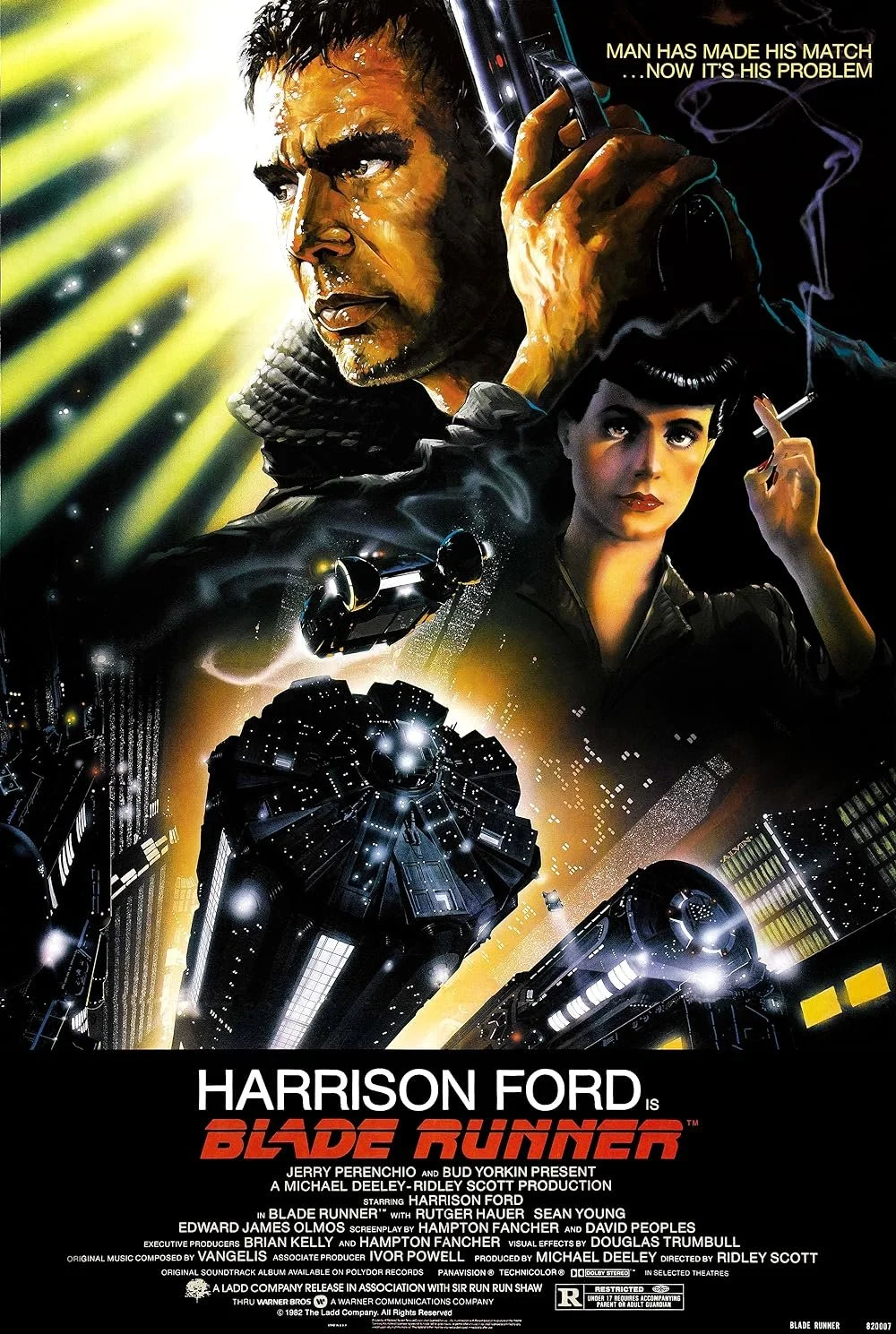
Future prediction: 50%
How long ago: 44 years ago. Set in: 2019, L.A.
Summary: Ridley Scott’s Blade Runner continues to be a hugely influential piece across all mediums of art. Despite being a box office bomb due to its philosophical tendencies, dystopian future, and lack of action, this cyberpunk neo-noir is still one of the most important pieces of the history of science fiction cinema.
What it got right: Mega corporations ruling the world, increasing social inequality, cultural fusions especially Asian (particularly Japanese dominance) dominance, voice commands on programs, animals going extinct, limiting nature’s boundaries, AI companions, environmental collapse.
What we still wait to see: Fully functional human replicants, towering and bleak metropoles, flying cars, complete erasure of our weather, trips far beyond the moon, off-world colonies, extinction of any living creature besides humans.
Dystopian scale
🏭🏭🏭🏭🏭
Believability
🔍🔍🔍
Technology
🤖🤖🤖
Innovation
💡💡💡
Real now?
✅✅
MVP: Production designer Lawrence G. Paul; his work moved the film into legend territory.
7.RoboCop (1987)

Future prediction: 60%
How long ago: 39 years ago. Set in: Near future Detroit.
Summary: Paul Verhoeven’s futuristic satire about a cop being converted into a robot after being left for dead by crooks boasts interesting themes. The Dutch auteur fires at all cylinders taking aim on the privatization of the justice system, a society brought to its knees due to out of control crime, and media sensationalism.
What it got right: Privatization of law enforcement, news overkill, militarized police with advanced robotics aim to seek and destroy, lack of ethical standard implementation, cops becoming judge, jury, and executioner, corporate influence over policing, high urban crime rates, prosthetic tech.
What we still wait to see: Massive, autonomous robots carrying supreme firepower and patrolling the streets, synthesis of robotics and humans, and Detroit becoming the ultimate crime-infested hellhole on screen (although it is pretty close).
Dystopian scale
🏭🏭🏭🏭
Believability
🔍🔍🔍
Technology
🤖🤖🤖
Innovation
💡💡💡
Real now?
✅✅✅✅
MVP: Paul Verhoeven’s taste for exaggerating violence mirrors the film’s media thirst for clicks and online traffic.
6.Total Recall (1990)

Future prediction: 20%
How long ago: 36 years ago. Set in: 2084 (unknown city).
Summary: Perhaps the most straightforward film in this list (and the second Paul Verhoeven output), Total Recall is more occupied with its fascinating plot than to present a slick future full of nifty special effects and cool technological gadgets. Still, whenever it can, it shoehorns in holograms and memory manipulation via implants while space travel is available but strictly managed by big corpos.
What it got right: Memory manipulation (although we are still early in the use of neurotech like Neuralink), Mars ambitions (SpaceX), autonomous cars, and corporate control of planets are in play (beginning with our moon).
What we still wait to see: No memory implants, no mutant resistance on Mars, no space travel, no holograms, no space colonies.
Dystopian scale
🏭🏭
Believability
🔍🔍
Technology
🤖🤖
Innovation
💡
Real now?
✅✅
MVP: Verhoeven making the most the film’s intriguing premise of what is real and what it isn’t.
5.Terminator 2: Judgment Day (1991)

Future prediction: 20%
How long ago: 35 years ago. Set in: Modern L.A.
Summary: This sequel is not afraid to comment about the puny humans’ tendency to be enticed by the benefits of artificial intelligence. Interestingly enough, we are living now on what the film predicted will happen: being infatuated with AI’s endless possibilities all the while ignoring massive red flags. Consequently we are pushing society towards more automation deprived of human oversight.
What it got right: Advanced AI (like large models) and robotics exist, lack of human oversight, more automation in every day life and warfare (e.g., drones), data privacy breach, technological advances by private corporations without ethical concerns.
What we still wait to see: No nuclear Judgment Day, no war with AI controlled machine armies, no time travel, no cyborgs or villains made out of liquid metal targeting humans.
Dystopian scale
🏭
Believability
🔍
Technology
🤖
Innovation
💡
Real now?
✅✅
MVP: Cameron’s thematically rich script tackling several elements but not at the expense of entertainment.
4.Demolition Man (1993)

Future prediction: 70%
How long ago: 33 years ago Set in: 2032, L.A.
Summary: This tremendously fun actioner focuses more on societal dynamics than on the application of mind enslaving technology boasting a forced utopia like the one Aldous Huxley predicted in Brave New World. The excessive use of political correctness, the sanitization of modern day interactions, and constant behavioural scrutiny offer plenty of material for philosophical debate while any touches on tech interactions do not seem today far fetched.
What it got right: Video calls, feelings over facts, toned down language, lame humor, avant-garde food, demonization of masculinity, political correctness, culture wars, autonomous cars, making firearm illegal, banal and outrageous fashion.
What we still wait to see: Cryo freeze for criminals is still a thing waiting to happen, enhancing the human brain through neurolinks, demonization of those who do not adhere to societal standards.
Dystopian scale
🏭
Believability
🔍🔍🔍
Technology
🤖🤖🤖
Innovation
💡💡
Real now?
✅✅✅✅
MVP: Stallone’s fish out of the water cop in this version of L.A. saying out loud what we are all thinking.
3.The Matrix (1999)

Future prediction: 30%
How long ago: 27 years ago. Set in: 2199.
Summary: The Matrix is mostly remembered by the mainstream audiences for its (still) cool bullet time effects, leather outfits, Hugo Weaving’s Agent Smith, the industrial soundtrack, sensational visuals, and guns, lots of guns. Taking a peek inside the film’s core, one will discover an insightful examination on how we enslaved ourselves to an AI grind of our making.
What it got right: AI is everywhere - from simple tasks such as typing to composing music, generating videos, or enhancing our virtual appearance. People are zombified plugged 24/7 on a smart phone or tablet unaware of those without internet access. The Matrix is a cinematic representation of how profound the effect of social media and internet have on us.
What we still wait to see: No brain-jacking, no war with the machines, no dystopian post-apocalyptic future where humans are hunted and killed or cultivated to be a battery.
Dystopian scale
🏭🏭🏭🏭🏭
Believability
🔍
Technology
🤖🤖
Innovation
💡💡
Real now?
✅✅
MVP: Wachowskis’ screenplay paying homages to all the greats in cinema, anime, and literature.
2.Minority Report (2002)

Future prediction: 80%
How long ago: 24 years ago. Set in: 2054, Wash. DC
Summary: Another film based on Philip K. Dick’s works, Steven Spielberg’s Minority Report deals with an uber-policed future where prosecution is possible for a crime that has not happened. In other words, crime prediction. Spielberg’s novel idea of how technology would look in 2054 was prescient to what things came after the film’s release to an extraordinary degree. While few people championed Minority Report as a classic, 24 years later, the mindset has changed.
What it got right: Iris scanners, multi-touch surfaces, cloud computing, autonomous cars, micro air vehicle, gesture recognition, finger tracking, targeted advertising, crime prediction, e-paper, data surveillance.
What we still wait to see: Jet packs, holographic displays, tiny robot spiders, psychic abilities, massive highways filled with autonomous cars.
Dystopian scale
🏭🏭🏭
Believability
🔍🔍🔍🔍🔍
Technology
🤖🤖🤖🤖🤖
Innovation
💡💡💡💡💡
Real now?
✅✅✅✅✅
MVP: Steven Spielberg - inviting scientists to create tech that could exist in 2050s was a stroke of creative genius.
1.Children of Men (2006)
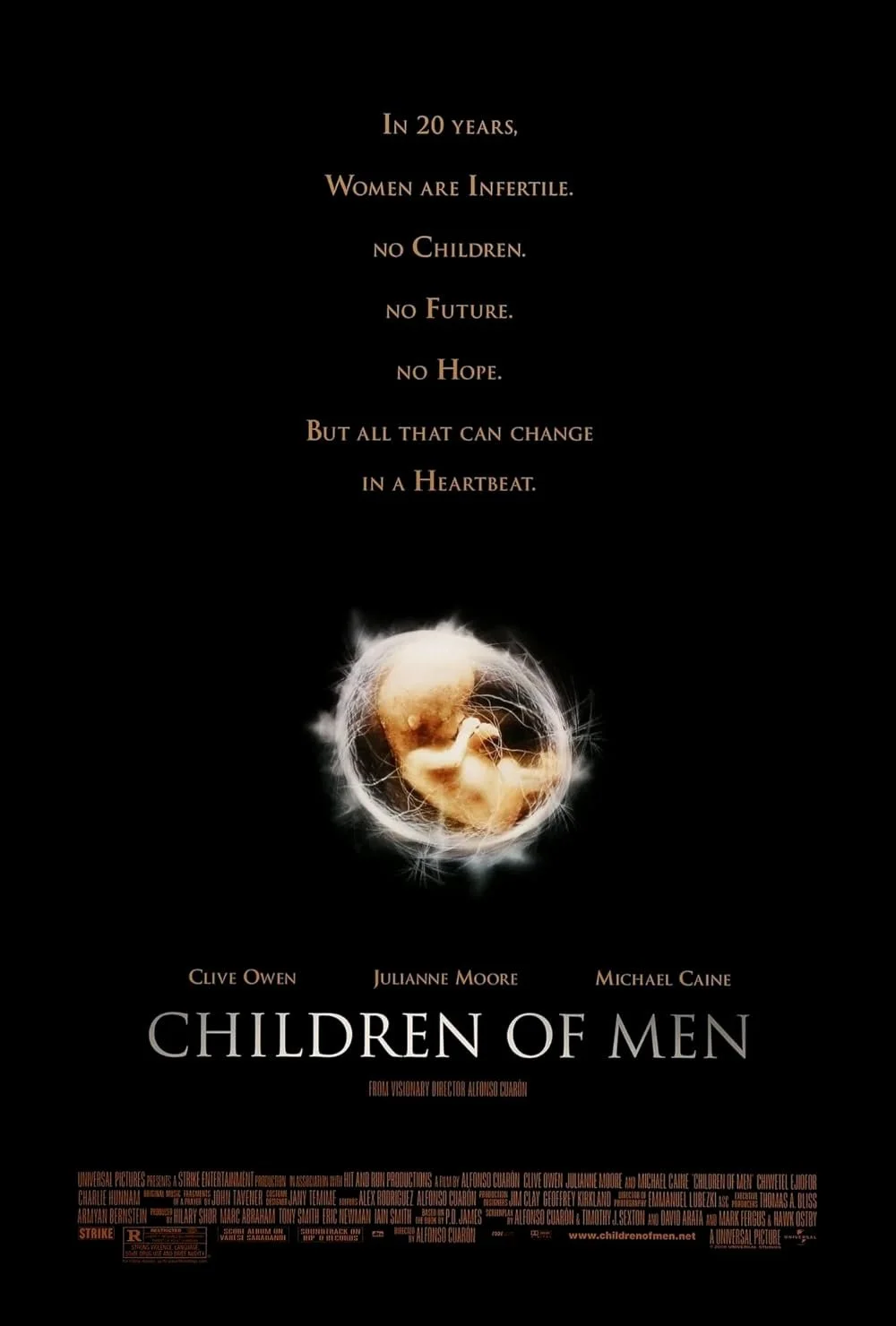
Future prediction: 90%
How long ago: 20 years ago. Set in: 2027, London.
Summary: Alfonso Cuaron’s Children of Men is perhaps the closest thing we have in terms of the future. This mega expensive, dystopian adaptation of the book with the same name is filled with political and social unrest amidst a fertility crisis that has resulted in a massive crime sweep worldwide. It is not as pushy or slick technological wise as other entries here. It is though closer to our present. The fact the youngest man in the world is a celebrity highlights the state and mind of humanity as a whole.
What it got right: Social unrest, erosion of cultural identity, political violence, media sensationalism, anti-immigration, refugee crisis, authoritarianism, migrant concentration camps, touch screens, life apathy, the Shard building(!), touch screens, declining birth rates.
What we still wait to see: Global fertility rates are dropping especially in the Western and some Asian countries but no infertility apocalypse yet.
Dystopian scale
🏭🏭🏭🏭🏭
Believability
🔍🔍🔍🔍🔍
Technology
🤖🤖🤖
Innovation
💡💡
Real now?
✅✅✅✅✅
MVP: Emmanuel Lubezki. His cinematography gives the film its necessarily bleak aesthetic.