
Battle Royale (2000)
Director: Kinji Fukasaku
Starring: Tatsuya Fujiwara, Takeshi Kitano, Aki Maeda, Taro Yamamoto
Primary genre: Dystopian
Secondary genre: Action
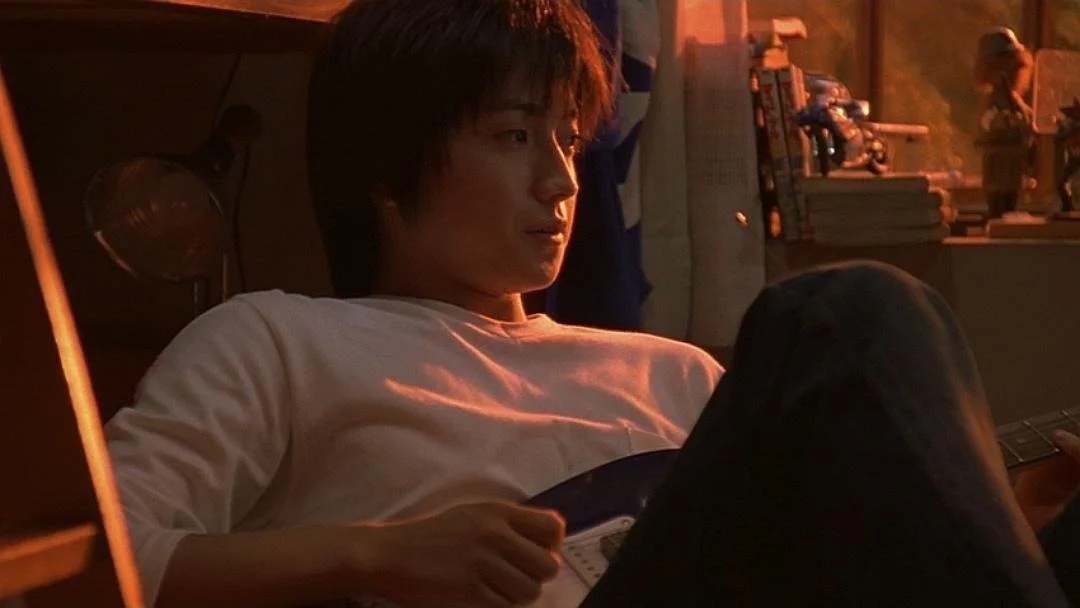
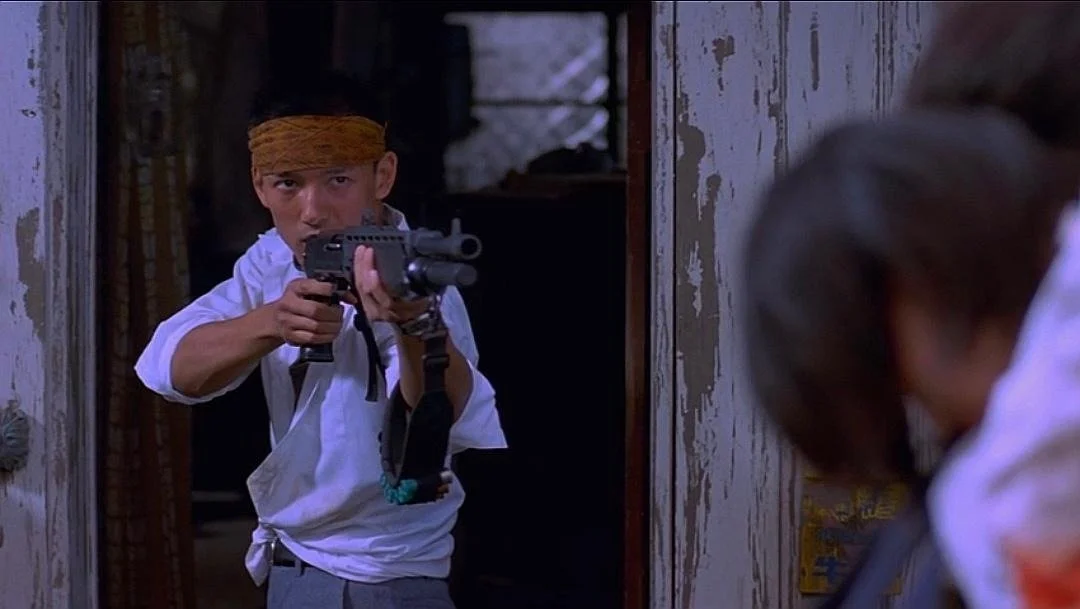
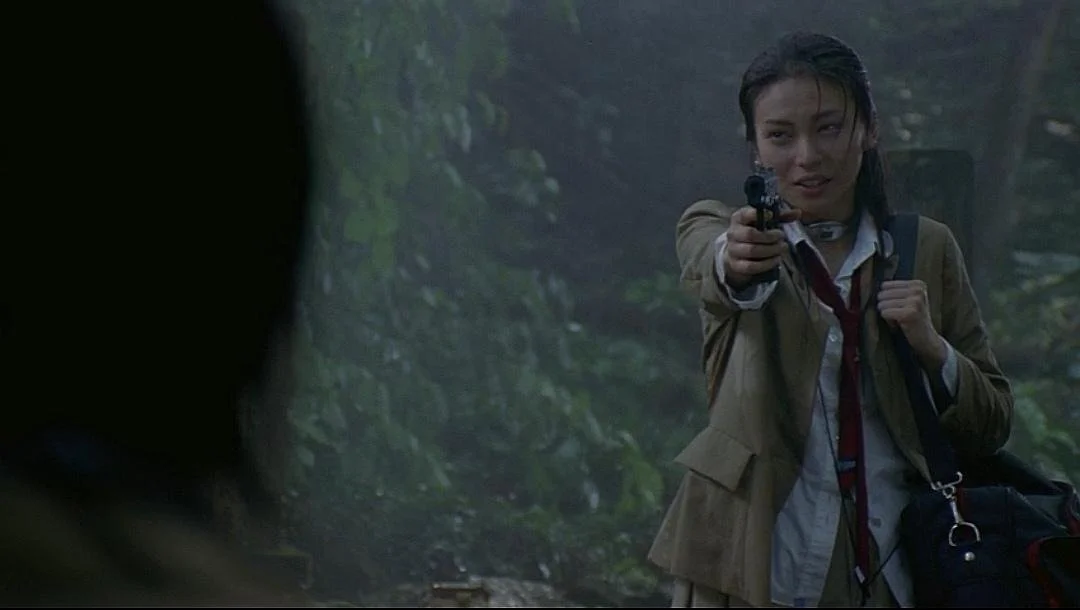
Cult, controversial, and quite influential (Mean Guns (1997), Hunger Games (2012-2026), Squid Game (2021-2025)), Kinji Fukasaku’s dystopian actioner made headlines upon its release in its home country (i.e., Japan). Packed with shocking, relentless, and remorseless violence, Battle Royale, based on the novel of the same name, was an accurate reflection of Japan’s general mood at the dawn of the new millennium; the older generations deemed the younger ones responsible for high crime rates and moral decline against the traditional values in which the Japanese take so much pride in.
Alas, in this blood-soaked story, we have 42 school teens who have been forced to kill each other by their government on an isolated island until only one remains. Anything goes; there are no rules, and Fukasaku’s movie excels at presenting an accelerated and much more pessimistic version of Lord of the Flies (1954) within the first fifteen minutes; its thunderous prologue grabs you by the throat under Giuseppe Verdi’s bombastic Requiem. Although you would expect to lose track of who is who based on the sheer number of personalities who cut and kill their way through in this free-for-all “game”, the script gives them sharp characterizations irrespective of their screen time. Whether they are heroes, victims, or flat-out villains, these students have distinct actions (and reactions) to the carnage while a small group benefits from brief flashbacks that aim to flesh out their background more. As the body count increases, so does our own awareness of the key parties which will inevitably clash.
“Life is a game. So fight for survival and see if you’re worth it.”
A reflection of how society and its structure can be turned upside down, from the moment the kids step out into the wider arena, the game immediately begins to devastating effect. The your-death-my-life mentality that perpetuates the story gives birth to stone-cold murder, self-defense, cowardice, seduction, sadism, suspicion, melancholia, paranoia, longing, revenge, and apathy. Fascinatingly, the kids use binary logic to predict their opponents’ intentions by applying filters such as friendship, school crashes, or appearances which can alter the dynamics of survival. It is a battle of wits, of willpower, and most of the time, of pure luck (e.g., the random weapons they receive range from a pot lid to a shotgun).
Thus, a deeply unsettling mayhem unfolds across a variety of settings; watching kids in school uniforms committing several atrocities leads to arresting and rather confronting images of violence. While the death scenes - typical for Japanese cinema - have an OTT flair, they never elicit laughter on the audience’s part. Some are brutal, others are nasty, and a few are totally avoidable, causing us to feel remorse for daring to participate or even cheer for their demise. None of us would have acted any differently in such extraordinary circumstances.
Fukasaku suggests the kids are a mere reflection of contemporary Japan. They simply do what they think is right by alienating themselves from the responsibilities of their adult counterparts. Yet, it is the elders who have failed them the most, demanding their blind obedience towards an unjust, unfair, and bleak society. Take, for example, Nanahara’s journey; abandoned by his mother and later by his father (who commits suicide), Shuya represents the struggling underdog whose hope for the future rests solely in his friends and school acquaintances; something Fukasaku keeps reminding us through clever intercuts to a basketball game, a sign of an era when individuals did not so quickly drop their alliances in order to kill each other at the whim of authoritarianism. Many filmmakers have used a more refined approach to comment on a state’s feeble foundations. Fukasaku, however, uses a sledgehammer, contrasting the aforementioned thematically opposite concepts.
What elevates Battle Royale from your standard dystopian flick, besides its relatable cast (played with surprisingly dramatic panache by young actors) and strong tragic depth, is Masamichi Amano’s beautiful score. Incorporating famous pieces from classical composers such as the aforementioned Verdi, Johann Strauss, and Sebastian Bach and relying on an superb performance from the Warsaw Philharmonic Orchestra, the score splits into action-heavy cues and gorgeous passages that aim to generate an emotional response to this death match. Similar to Fight Club’s (1999) philosophy of destroying something beautiful, so too here innocence is a bubble ready to erupt in horrifying ways, scarring the very essence of everyone caught in this, beyond repair. This is reflected by one of Battle Royale’s previous survivors, who is still unable to understand anything life has to offer.
The chief antagonist, played by Beat Takeshi, says that life is a game. Fighting for it, you will discover if you are worth it and Battle Royale makes a compelling case about human nature that needs to be studied by all age groups. After a furious and unforgettable rollercoaster of moments of thrilling suspense and scenes of subverting sadness, the beloved director hits the nail on the head and gives us something which the present day seems to forget: hope and resilience for the future.

A masterpiece from Japan
+Packed with awesome characters
+Confronting and thrilling
+Plenty of gasp! moments
+Fantastic soundtrack
+Brutal exploration of society
+Hits all the right dramatic notes
-Violence remains shocking