
Record of Ragnarok Season 2

-
Jack the Ripper
Gentlemanly Behavior
Raiden
Weakness of Heart
Strikes with My All Might
Dark Zero
Ominous Battle
-
Percussion: Taiko, hyōshigi, ōtsuzumi, drums, djembe, tingsha
Woodwinds: Indian flute, shakuhashi, nōkan
Strings: Harp, violin, cello, electric guitar, sitar, shamisen, kokyu
Keyboards: Piano, harpsicord
Electronic: synths, beats
Brass: Trombone
Vocals: female Indian vocals, female vocals, male vocals, female choir, soprano, male choir, tuvan throat singer

Diverse anime score
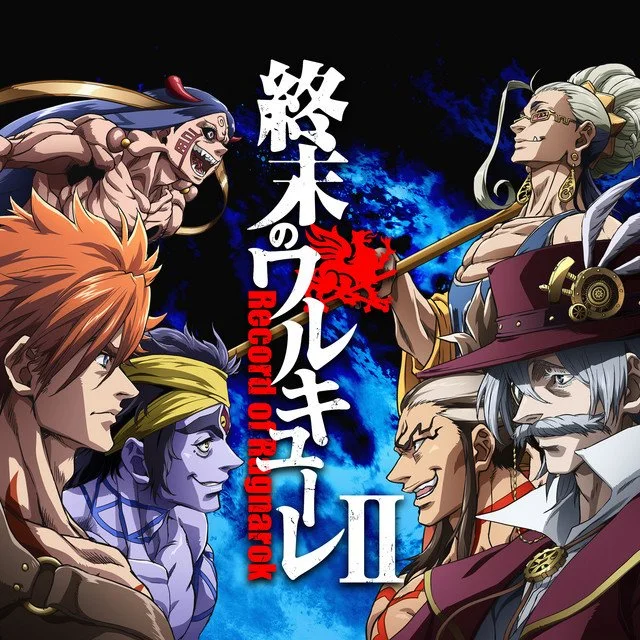
Yasuharu Takanashi is an underappreciated composer. People have not been paying attention to his unique skill of creating novel musical landscapes for anime, mainly Naruto (2003-2007) and Naruto Shippuden (2007-2017). In 2021, he was chosen to provide the score for the tv adaptation of one of Japan’s most popular manga, Record of Ragnarok (2017-present). The simple (yet absurd) story sees gods and humans from every era, religion, and country fighting in a death tournament that will decide the fate of mankind. This concept, of course, screams for an equally vivid landscape and Takanashi’s output can be easily described as sensational. Season 1’s soundtrack delivered a mix of different styles. From heavy metal and Bach to baroque and a thunderous choir, all were deemed necessary to describe the first of three (out of the 13) superhuman melees. As the manga progressed, so did the seasons with the second one focusing on the next three clashes: Hercules vs. Jack the Ripper, sumo wrestler Raiden Tameemon vs. Shiva, and Buddha(!) vs. the (fictional) god of misfortune, Zerofuku (based on Japan’s Seven Lucky Gods).
The album can be easily split into three parts, each one representing one of the three fights through a radically different soundscape with each fighter getting his own dedicated set of tracks. Takanashi alternates between crazy electric guitar riffs and roaring drums as if you are in a heavy metal concert (Raiden, Strikes with My All Might, The Indomitable Hero) to more country-specific arrangements (God of Destruction, Raiden, Seven Lucky Gods, Dance of Shiva), and simplistic performances (Gentlemanly Behavior, Pastoral World, Dark Zero) that aim to represent the series’ pure emotions (e.g., dread, heroism, sacrifice).
For Jack, a harpsichord, the vocals of a soprano, strings, a harp, and a piano are enough to transport the audience to Victorian London. Jack the Ripper, the album’s opening track (and one of the standouts), bursts through its heavy strings while a soprano’s voice results in a beautiful and unforgettable crescendo. Gentlemanly Behavior is a break from all the pulse-pounding energy in its solo harpsichord melody. Sometimes, simpler is better.
Takanashi clearly has a strong affection for the Japanese fighters though. Like Sakaki before, he gives Raiden four great cues of superb orchestrations of native instruments and electric guitars to highlight the wrestler’s overwhelming might. Raiden (the best of the four) has layers of Japanese percussion (taiko, hyōshigi, ōtsuzumi) and complementary metal riffs under a very catchy tempo. In Unparalleled Warrior which is similar to Samurai Fight from season 1 albeit at a slower pace, he adds a shakuhachi, strings, contemporary drums, and a screeching nōkan flute. In Weakness of Heart, he includes a shouting choir (trademark of Takanashi) displaying a very blues-inspired 24 second guitar solo at 1:01 while Strikes with My All My Might (another standout piece) is a memorable tune describing perfectly Raiden’s goal in the tournament.
Shiva’s cues have the expected Indian flair (God of Destruction, Dance of Shiva, The Top of India) to describe the only god from the Hindu religion. Out of the three, Dance of Shiva is the best: percussion, djembe, sitar, female voices, Indian flute, and the use of modern drums at 1:05 give the cue a more contemporary and playful character. The other two have more dramatic flair (e.g., strings, violin) but have almost identical nature. Although adequate, they do feel shoehorned just for Shiva while the more Takanashi track (Tandava Karma) was surprisingly absent from the album.
For the battle between Zerofuku and Buddha, the composer slows down giving us a quartet of pieces primarily aiming to create atmosphere. Seven Lucky Gods is pure Japan; traditional male vocals and shamisen hint the coming of Zerofuku. In Dark Zero, a very creepy choir (including some synths at 0:50) resembles the Kyrie movement from György Ligeti’s Requiem heard in 2001: A Space Odyssey (1968) across two minutes full of dread. It is the most serious tune so far and the only one where the music is invoking a genuine threat. As for the Enlightened One, Buddha, the pieces accompanying him reflect on his rebellious, funky mood through offbeat guitar melodies (Loose Cannon) and a dash of trip hop beats (No Worldly Desires) resembling the work of DJ Krush. The only track that brings these two characters together is Ominous Battle packing non-stop percussion, chanting choir, female solo vocals, tuvan throat singer, and some swirling strings to illustrate the ridiculous power of Zerofuku. Lastly, the final track, Legends of the Helheim, is nothing remarkable considering what came before. While you get some nice ethereal female vocals which sound almost identical to those in Rurouni Kenshin (2012), it is all about the establishment of moody ambience and nothing more.
If one god continues Takanashi’s style from before, it is Hercules; his heroic anthems bear a striking number of similarities from season 1’s outputs. The Indomitable Hero boasts an AC/DC Back in Black drum-and-electric-guitar intro that progresses into something more meaningful at 1:17 with its chorus aiming to elevate the demigod’s heroic charisma. Unclouded Justice backs this trend bearing adequate (but vanilla) choir and percussion and bringing forward a heroic brass at 0:28 which is a slower version of season 1’s Never Down, Never Back.
However, a handful of pieces exist strictly to fill in the gaps when individuals are not punching each other lacking the finesse described above. London Bridge Is Falling Down is sinister enough in its piano notes, male vocals, and electronic synths; Pastoral World is optimistic in its simplicity; and In a Corner of the Town although a tad too happy, it’s not an easy listening experience unable to stand on its own.
Record of Ragnarok Season 2 soundtrack is an excellent continuation musically at least for the series. Despite its lack of thematic cohesion - once the fight ends, its cues are never to heard again, each track is unique across the 20-track album. Takanashi’s spray from the hip approach will generate enthusiasm in those seeking an album where each piece brings something new. However, those audiophiles who desire lengthy tracks and wonderful melodies will be very disappointed. Still, its production is exquisite; not a single instrument is drowned under a cacophonous mixing sounding crystal clear. If you do decide to give this a listen, pay close attention. There is something for everyone.