
Rurouni Kenshin: Kyoto Inferno (2014)

-
Fate - The Heartbeat of the Labyrinth
Great Kyoto Fire
Nightmare
Darkness
Reverse Sword Blade
Kyoto
-
Electronic: Keyboards, electronic sounds, Synthesizers
Keyboards: piano
Vocals: Female solo vocals
Guitar: Electric guitar, acoustic guitar
Percussion: Drums, ethic drumming, bells
Wind: Zurna, shakuhachi, cho
String: Violin, violas, cello, santoor, koto
Brass: Tuba, trombone, bass trombone, horn

Exciting and thematically rich
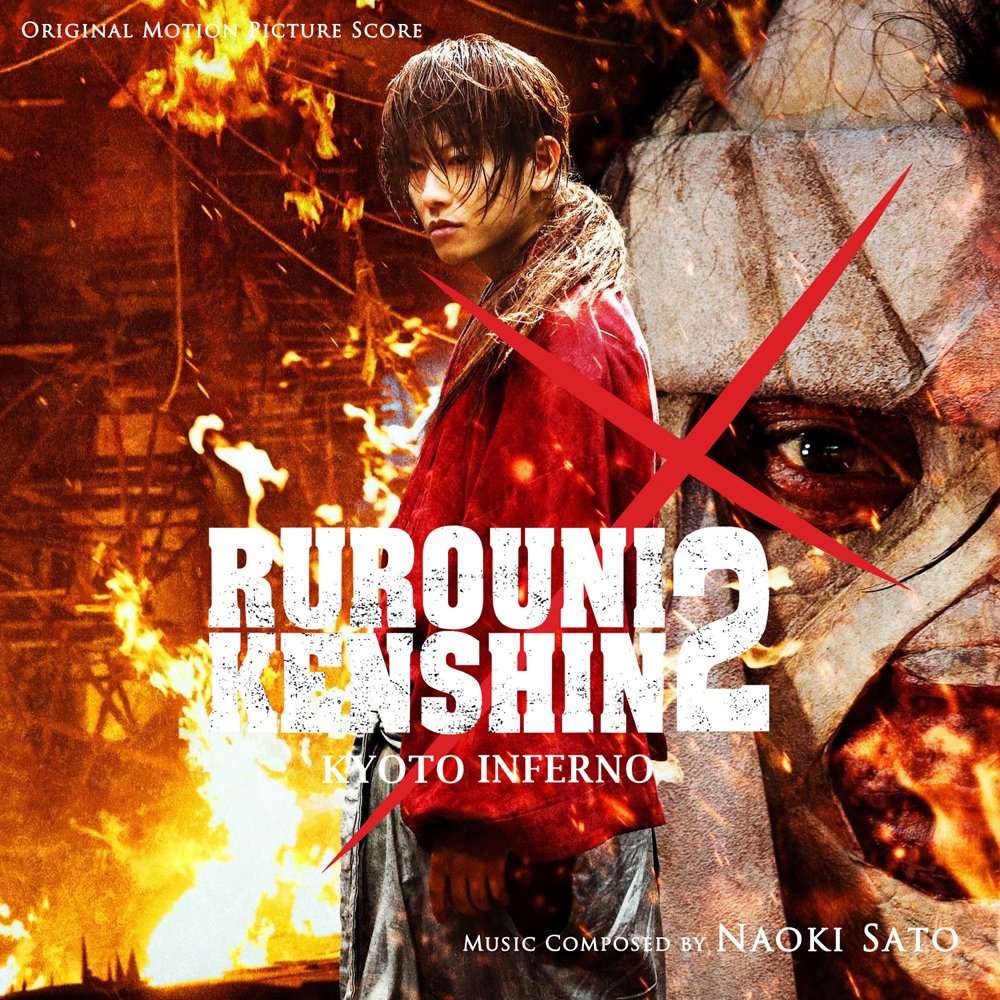
Kyoto Inferno’s approach to the adventures of Himura Battosai is radically different from its predecessor two years ago. While the first film had a more contained approach with a limited canvas that featured an interesting mix of electronic sounds, traditional orchestral arrangements, heavy guitar riffs and ethnic instruments, this time around composer Naoki Satoh from the get-go aims to go big (hello Braam! sound). Results are mostly successful depending on where you're coming from (e.g., the pseudo synths might sound out of place for some). Yet, there are lots of inspiring musical choices here that together create a thematically rich album even if it occasionally relies on previously established work (NewStyle, Reverse Blade Sword, Nightmare, Darkness, Reverse Blade Sword 2, Great Kyoto Fire).
Most of the tracks are distinct bearing a layer of percussion that underlines the frenetic action while contemporary stylings enhance the dramatic and romantic aspects of the album. The opening cue (Fate - The Heartbeat of the Labyrinth) is easily the standout and the perfect accompanying piece for Shishio Makoto, our Shakespearean inspired villain. A slow build up with minimal male choir of Latin chants, and sho (sounds like a Japanese harmonica despite being a mouth organ) and koto usage that after 3 minutes and 27 seconds builds up to a musical crescendo which invokes a sense of majestic tragedy (after the 4:30 mark) and well, inevitability. Shishio will be the catalyst for many of the skirmishes to come in two installments (The Legend Ends). His theme is so good that Naoki uses it once more (albeit shorter) (Fate). The tolling bells are a nice touch, especially when they are combined with the soulful, searching string writing highlighting the bad things to come from a place of tragic circumstances (Shishio’s betrayal).
The score develops as it progresses through multiple different emotional styles as the new tracks fall into three categories. First, we have tracks heavy on Zimmer soundscapes like Braams, extensive percussions, and screeching strings (Scene of Carnage, Disturbance). Second, we have a peculiar choice of synth beats either with nice rhythmic qualities (Fanatic) or some clunky integrated guitar work with evocative strings (Those to Protect). Finally, we have those relying heavily on string arrangements either hopeful and playful coupled with high pitched vocals (Kyoto), more action oriented (Lighting, The Trick of Rengoku). Interestingly though The Trick of Rengoku is where Satoh rests his case in a rather underwhelming note. This less than a minute track feels anti-climactic like the film it accompanies forcing you to wait for The Legend Ends for the complete musical experience.
As for the aforementioned existing cues from the previous film, they have slightly new arrangements but nonetheless fit nicely to Kyoto Inferno giving either great pacing, dramatic heft and superb ambience with a Japanese twist. Kenshin’s incredible musical theme (Kyoto Great Fire) is the stuff composers dream of writing featuring a new extensive section of drum and guitar that is really rock n roll and another highlight of the album. Reverse Blade Sword and its extended piece with a piano intro in Reverse Blade Sword 2 can easily move the tear ducts; Satoh’s arrangement is beautiful, lyrical and almost inappropriate for a film based on a manga with exaggerated hair styles.
Finally the other two standouts remain still the tracks Nightmare and Darkness. Utilizing the same ambient sound in the background, the former makes excellent use of the Japanese dulcimer that is the koto instrument in an extended performance of 3 minutes which gives away an unsettling and gloomy atmosphere. The latter replaces the dulcimer with superb female vocals of low frequency sounding like a portion of water in a midnight desert; an efficient musical conception that is both haunting and strangely, beautiful to one’s ears.
Kyoto Inferno is unfortunately a score most people in the West have not heard about and it is a shame. Considering the mediocre digital productions that have plagued action blockbusters with their lack of memorable cues, Naoki Satoh delivers a fascinating album that although it ends on an underwhelming note, perhaps it should be listened back-to-back with The Legend Ends. Only then can someone perhaps appreciate the true brilliance of his work in a thoughtful action movie.