
60 Years, zero Greeks: The silent erasure of Greek culture on screen
US films set in Ancient Greece
I was born in Greece. Both of my parents are from Athens, residing now in Oropos, a calming sea-town just 40km away from the hectic and busy life of our capital. Considering how awesome the Greek myths and stories are, you can imagine my excitement when Christopher Nolan, one of the best directors at the moment, announced that will shoot the most epic of epics (and epic is the Greek word created to describe exactly that scope of a pome) in the Imax format: Homer’s Odyssey (2026). However, the cast left me disillusioned. Matt Damon as Odysseus? Tom Holland as Telemachus? Anne Hathaway as Penelope, Zendaya as Athena, and Lupita Nyong’o as Clytemnestra and Helen of Troy? Himesh Patel as Eurylochus? Wil Yun-lee as Odysseus’ shipmate? Travis Scott as a bard? John Leguizamo as Eumaeus? My excitement turned sour. I don’t feel excited but rather erased. Although I had no issues when it comes to films based on Greek myths and stories utilizing what filmmakers thought is the best actor in the business (or the most bankable), you would argue that my bitterness has taken the best of me. The reason? The contemporary climate of culture representation. Leguizamo has spoken about the non-visibility of Hispanic people in Hollywood, and how Al Pacino should not be in Carlito’s Way (1993) because he is not Puerto Rican. Well, neither was he Italian-American in Super Mario Bros. the same year and nor he is Greek. Irony at its finest.
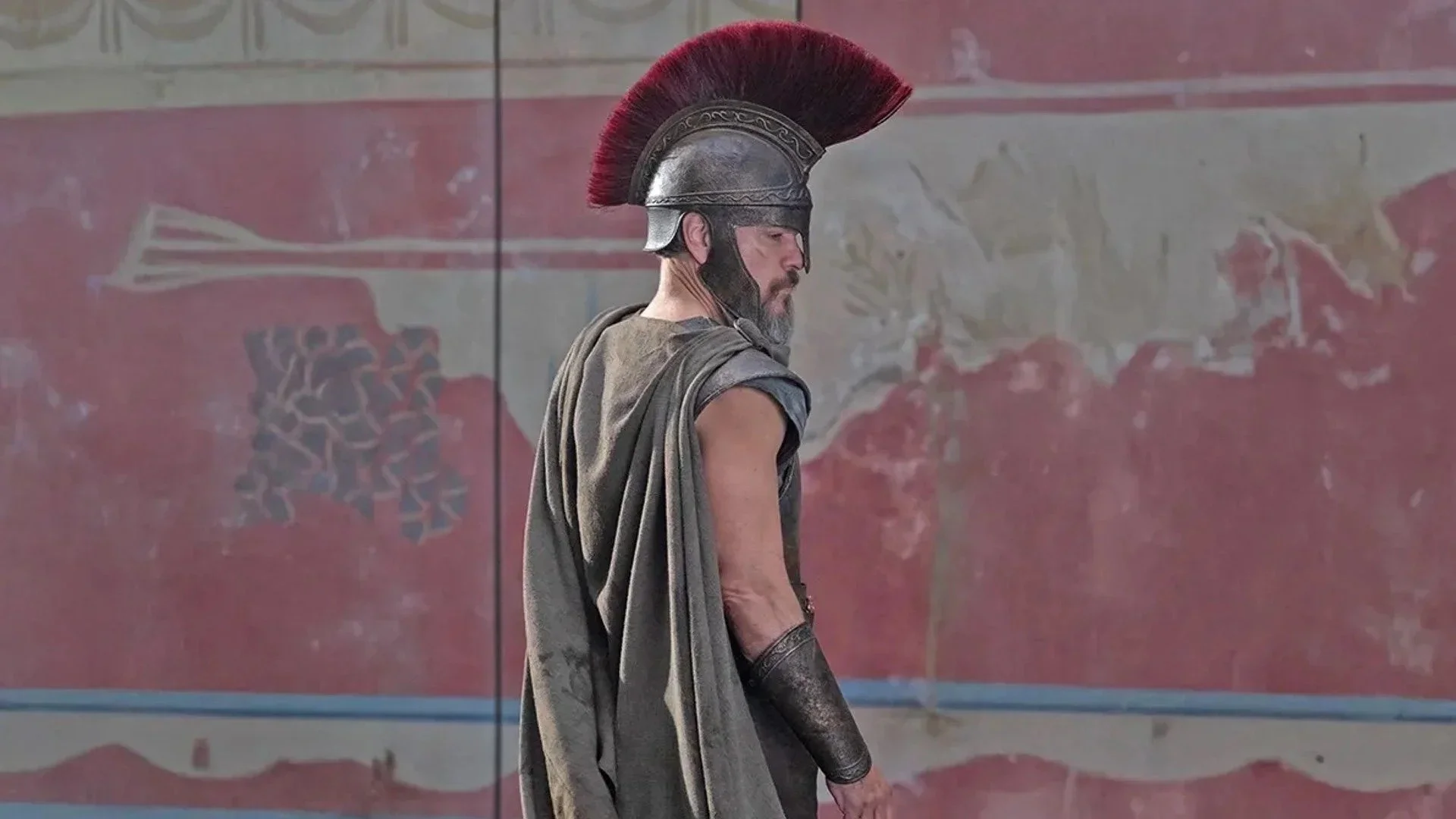
When someone thinks of a cinematic incarnation of Odysseus, the cunning king of Ithaca, they think of Matt Damon.
We demand Japanese actors for Japanese stories.
We demand African actors for the (fictional) Wakanda stories.
We demand Korean actors for Korean stories.
We demand Polynesian (voice) actors for a Polynesia setting (e.g., Moana (2016))
And we are right to demand it. But in sixty years and 19 major theatrical films set in Ancient Greece (i.e., Ulysseus (54), Helen of Troy (56), Jason and the Argonauts (63), The Trojan Women (71), Clash of the Titans (81), Hercules (1983), Hercules (1997), Troy (2004), Alexander (2004), 300 (2006), Agora (2009), Clash of the Titans (2010), Immortals (2011), Wrath of the Titans (2012), 300: Rise of an Empire (2014), Hercules (2014), The Legend of Hercules (2014), The Return (2024), Nolan’s own Odyssey (2026)) have not had a single Greek or Greek-diaspora actor in sight. These dream roles had no one even from the Mediterranean playing Odysseus, Achilles, Perseus, Hercules, Leonidas, or Alexander.
Main actor ethnicity
When the story is Greek - the civilization that gave the world democracy, the genres of comedy, satire, tragedy and drama, philosophy, the Olympics, mathematics, physics, theatre, astronomy, epidemiology, democracy, poetry - suddenly everyone discovers how “mythology is universal”, “ethnicity (another Greek word) doesn’t matter” and “the stories are classics (another Greek word)”. Why being Greek is the only ancient identity Hollywood treats as public domain? Dwayne Johnson’s Hercules and Zack Snyder’s 300 was the closest a film came to physical authenticity (although Spartans were going to battle wearing a 40 kg bronze panoply) and even then, the industry framed them as “muscle movies,” not serious attempts at cultural representation. Gal Gadot’s Israeli accent in Wonder Woman (2017) was pretty close to how any major Greek-inspired character would have sounded if they spoke English but this was Amazonian fan-fiction, not Homer.
Main actor nationality
The rest?
Brad Pitt as Achilles.
Gerard Butler roaring in a Scottish accent as Leonidas.
Colin Farrell scaring people away as Alexander with whatever accent he was trying to pull off.
Sam Worthington (Australian) as Perseus.
Henry Cavill (English) as Theseus.
Kellan Lutz (American) as Hercules.
And now Matt Damon, the most American face in cinema as Odysseus?
The main cast leans (for some reason) always towards Anglo-Saxon or Celtic background, yet never Medditterrean. Meanwhile, Nolan casts Zendaya as Athena and Lupita Nyong’o as Clytemnestra and Helen of Troy but people got outraged only when Alex Proyas in his much maligned Gods of Egypt or Ridley Scott in his Exodus (both in 2016) had white actors as the main leads despite tackling mythology set in Ancient Egypt (fan fact: Egyptians are not black just because the country is in Africa). As such being diverse seems selective stopping exactly where Greek ethnicity begins. If Black Panther’s (2018) cultural specificity was necessary (especially for a fictional superhero), if the all-Japanese cast of Shōgun (2024-present) is being praised, and if Crazy Rich Asians (2018) showcased Asian-American representation, then why is it still open season on Greek stories? So there is a problem of consistency - if you celebrate diversity, then include diversity at every story. Else you can elect to remain true to the spirit of the source material and invoke authenticity. At this point Nolan’s casting with all sorts of ethnical background denies the Greeks as an ethnic group.
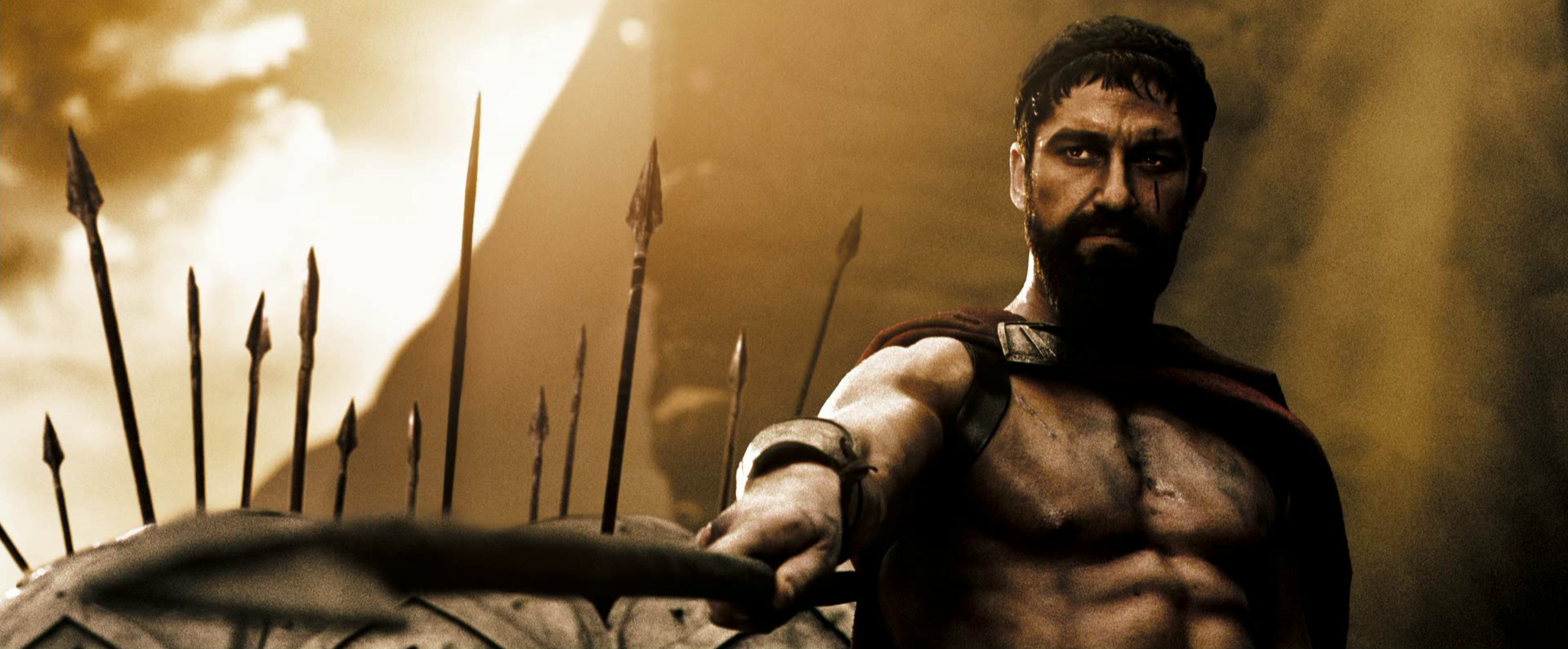
Gerald Butler created a new movie icon in his “Scottish” take of the Spartan king, Leonidas in 300.
Imagine the reaction if in the 47 Ronin (a real Japanese story) cinematic adaptation, you race-swapped a former samurai (and they did as Keanu Reeves who has mixed race heritage still received some criticism despite his physical features being part of the story). The internet would burn for weeks and rightly so. A common argument is that if it is mythologically based and a movie, you are arguing about fiction, myth and directors should be able to cast whoever they cherish. And you would be correct. Let’s be honest, it would look weird if you would adapt the China’s Journey to the West, written almost 433 years old, with a person of different ethnicity other than Chinese. You can scream representation matters and then being comfortable doing that in Greek myths and stories which are thousands of years old (Odyssey is 2,700 years old). Greek is an ethnicity. Being Mediterranean is a real phenotype - our signature trait is our olive skin and Greeks have more things in common with the Egyptians, Tunisians, Italians, and the Maltese than the British. We are not Vikings. We are not Anglo-Saxons, Celts, or Slavs. We are not a blank canvas for whatever aesthetic Hollywood wants this decade and adding ridiculous fake accents make matters worse veering into the territory of parody.
I’m asking for the same respect every other culture on earth receives at least from the Western medium of entertainment. Cast the best actor. Just make sure Greek ones are actually in the room when you’re looking and if they are terrible, so be it. Because the cradle of Western civilization deserves better than being treated as the one culture that identity politics forgot. As a Greek, I am tired of watching my ancestors played by people who couldn’t find Sparta or where the Olympic Games initiated on a map.