

Summary
Shot entirely on location, Michael Mann’s Heat is a landmark film. It managed to showcase a gorgeously (and realistically) lit Los Angeles at night amidst its epic cops-and-robbers tale. Mann’s regular cinematographer, Dante Spinotti, used a combination of natural and practical lighting to capture a gritty and unconventional look. Its almost colorless palette comprised extremely black, midnight blue, and grey has, since its appearance, become a reference point for hundreds of films including Christopher Nolan’s The Dark Knight (2008) and Ben Affleck’s The Town (2010).
Spinotti captures the vastness of Los Angeles by placing Heat’s numerous characters as isolated individuals within the urban sprawl, often positioned at the center of wide shots and long takes surrounded by the emptiness of “cold”, contemporary architecture. Look, for example, at the iconic frame of De Niro staring at the ocean from inside his house, which was inspired by Alex Colville’s Pacific painting; there is only a single figure inside a slick but empty and monochromatic residence.
Mann requires his composition to be as authentic as possible by using unique, albeit modern environments to tell the story. Such a tactic can be seen in his earlier films too (e.g., Thief (1981), Manhunter (1986)) as well as in later outputs (e.g., Collateral (2004), Miami Vice (2006)) where the protagonist(s), standing in a setting’s core, deliver a sense of naturalistic scale and immersion.
Heat, however, is particularly remembered for its nightscape shots, whether these are of Downtown L.A. from a helicopter’s POV, of the suburbs of City Terrace and Hollywood Hills or display more kinetic work inside establishments such as a Koreatown club, a fancy dinner or a coffee shop. Interestingly, Mann is not aiming to create a new style though. He simply seeks to complement the foreground activity like in the scene when Neil and Eady are on her terrace.
That’s why Heat works on so many levels. Despite its stripped down from flashy directional elements and hypersaturated colors, Mann delivers something a story that is presented with our reality’s panache.
Influences
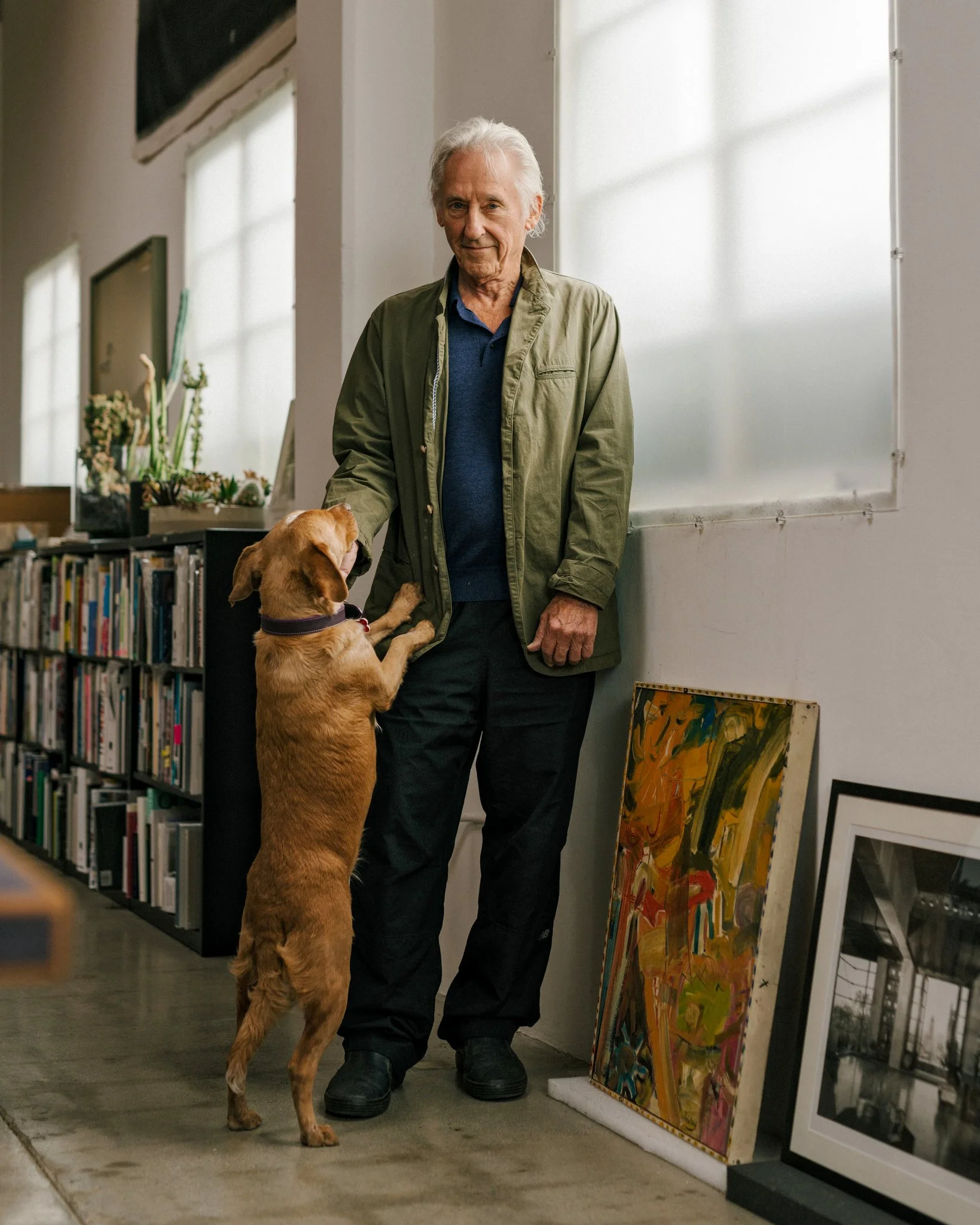
Ed Ruscha
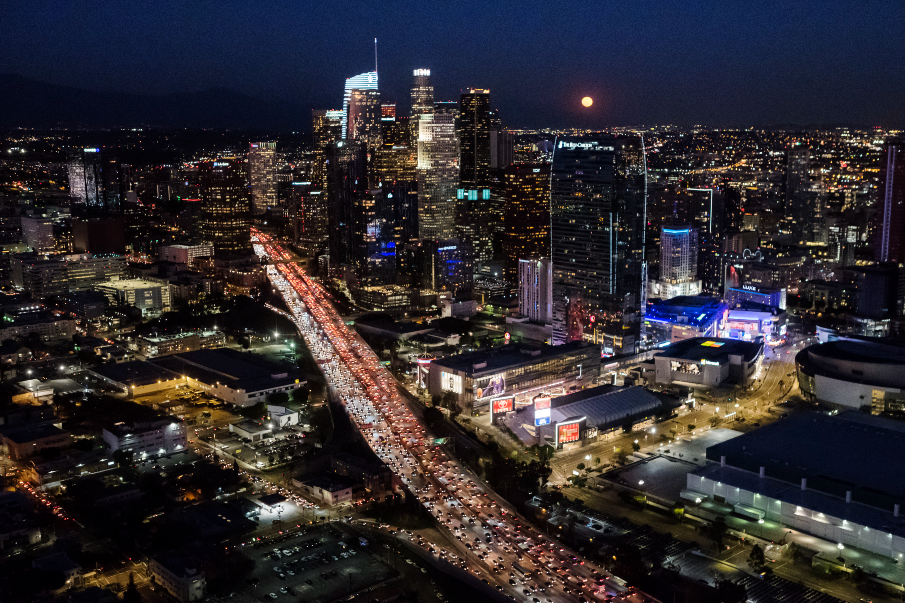
Night time Los Angeles


