
Fight Club (1999)
Director: David Fincher
Starring: Brad Pitt, Edward Norton, Helena Bonam Carter, Meat Loaf
Primary genre: Psychological
Secondary genre: Thriller
Nominated for: Best sound effects editing

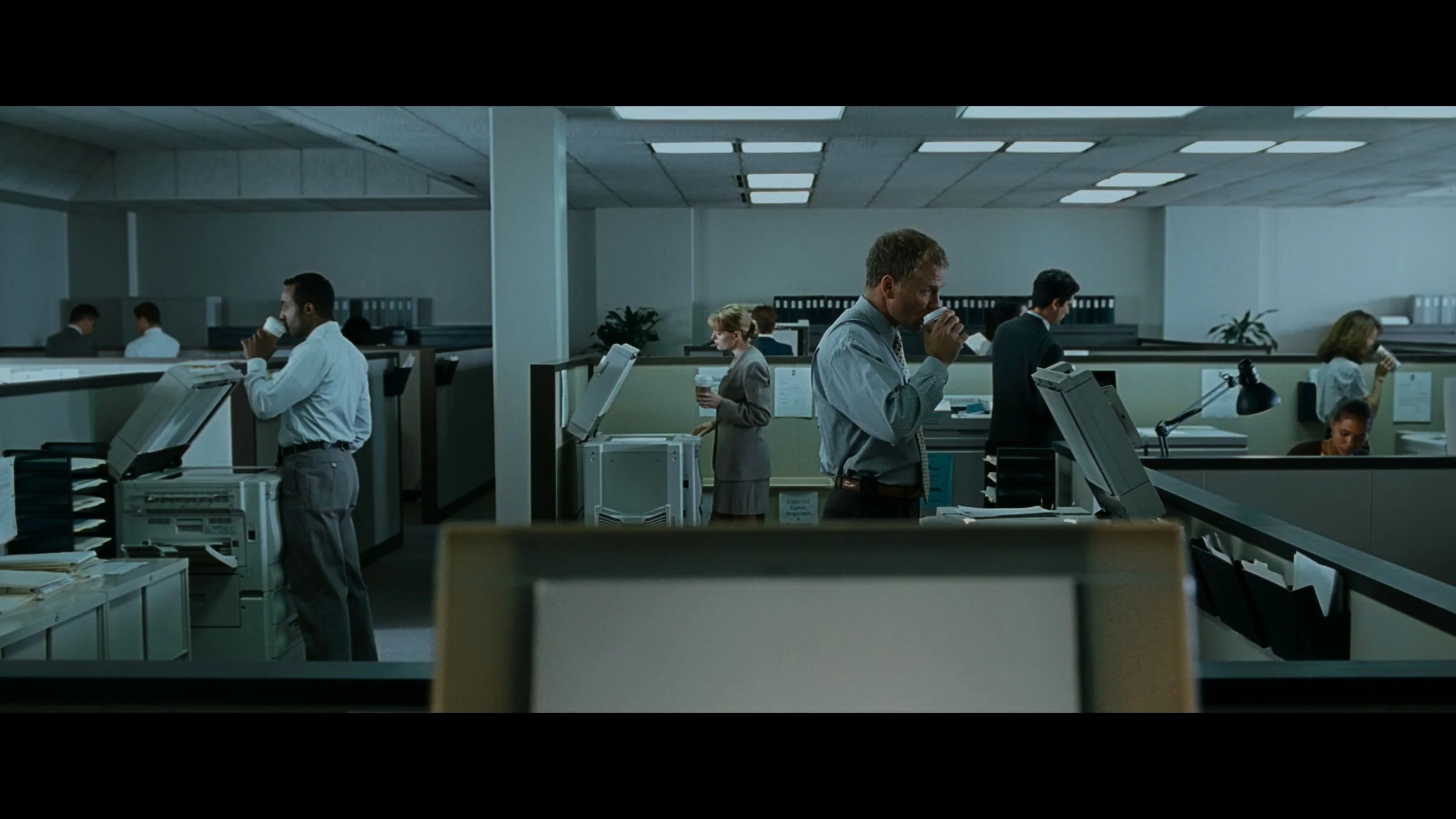

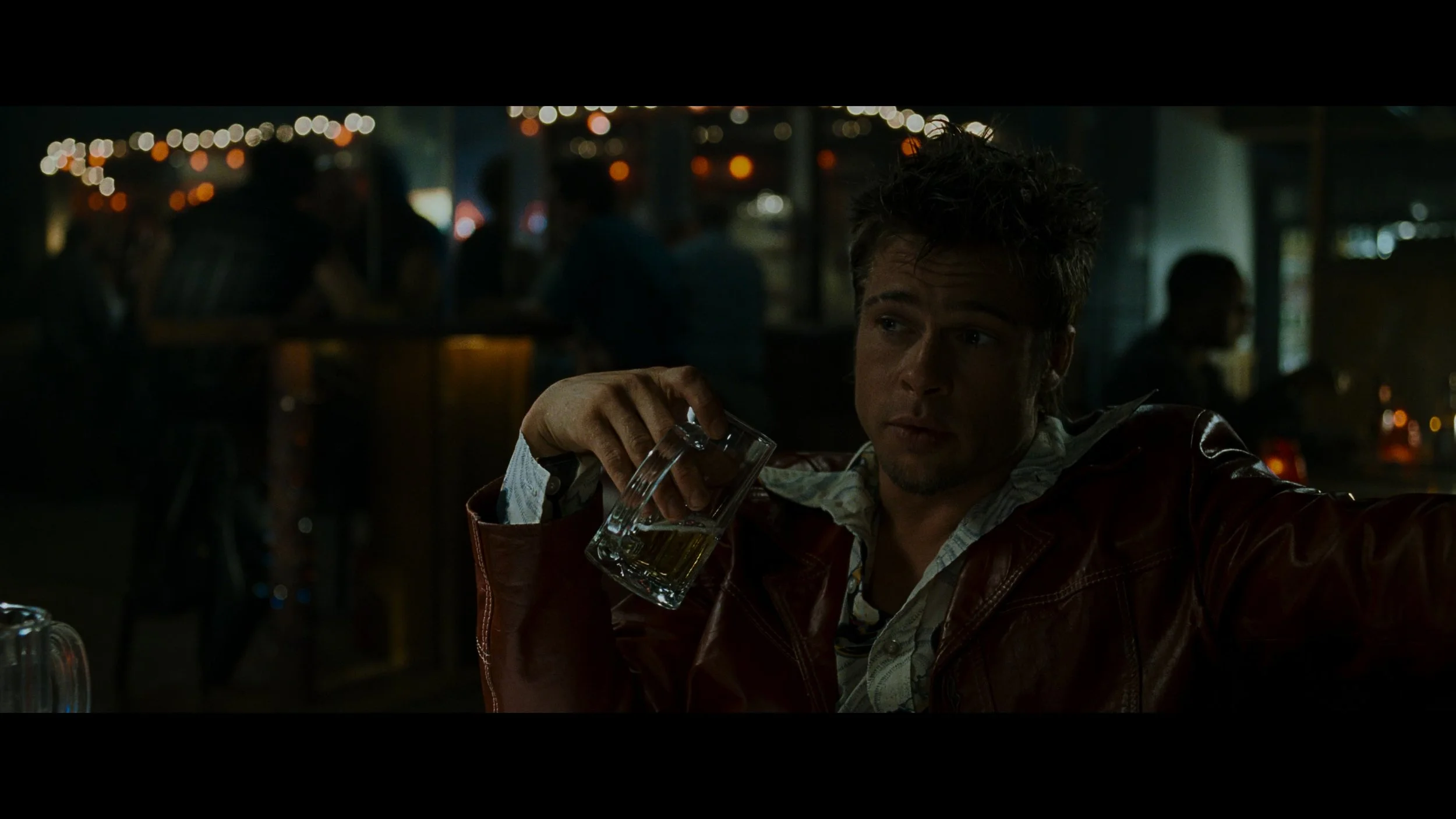
“You are not a unique snowflake” summarizes perfectly David Fincher’s anarchic film about excess capitalism, daily apathy, and superficial interactions. Set in a moodily lit L.A., The Narrator (a brilliant Edward Norton) is navigating through his white-collar job with the enthusiasm of a sleepy cat, his body language reflecting the lack of possibilities for his generation. Until he meets Brad Pitt’s Tyler Durden (now a cinema icon) that is, who represents a human gateway into chaos all the while disregarding savoir-vivre lifestyle choices and standardized aspects of modern masculinity.
“The things you own end up owning you”
Fight Club was a financial failure back in 1999 due to a terrible marketing campaign that presented it as a macho action flick, placing Pitt’s gorgeous body front and center as he defeated physically imposing opponents. Far from it. What Fincher and screenwriter Jim Uhls (Jumper (2008)) had in mind was a character-driven deep dive into 1999’s contemporary culture along with its intellectual, emotional, and social decay; two individuals coming together in the most outrageous circumstances to interpret the world and shape it as they see fit.
Chuck Palahniuk’s novel drew some criticism due to its nihilism and desire for unnecessary anarchy. Yet, two decades later, Fight Club’s messages (improved by Jim Uhls according to Palahniuk himself) are more relevant today than ever under extensive dialogue scenes between The Narrator and Durden and nuggets of black humor. Senseless capitalism has taken over (IKEA, Starbucks (Fincher has said that he has inserted a coffee cup in every shot), Krispy Kreme, and other brands rule daily lives), isolation inside a digital and gadget-driven bubble, de-sensitization, endless advertisements, work bound by large amounts of red tape and report writing and in the midst of it, human beings unable to connect with others or to express themselves, desperately trying to control their online image to appeal to hundreds, if not thousands of unknown others.
Fight Club tore apart the culture of the 90s and became a generation’s voice. Millennials were told they would have it all if they study and work hard enough only to find a shuttered and emotionally empty wish list of dead-end possibilities. The hippies of the 70s who so much talked about peace, freedom, and a groovy lifestyle have given birth to a world that is rotting no matter how much emphasis it puts on its shiny exterior. Tackling several social topics at once, the literal Fight Club in the movie focuses on the liberation of modern men from their meaningless lives through fighting, a form of venting. In a message that can be easily misinterpreted, men from every job and social background become alive by acknowledging their primal instincts by taking part in this bizarre social experiment where beating each other gives them some sort of purpose and emotional catharsis.
The Narrator is our narcoleptic consciousness - awakened only when something horrible occurs or when he strongly desires it to happen; anything really to make him snap out of a pointless, hollow reality that strips away individuality. Interestingly enough, he does exactly that when he attends plenty of support meetings in one of the meaner (and absurd) moments of the movie. The story is filled with uncomfortable scenes (e.g., a cancer-stricken patient asks openly in her support meeting to have sex before she succumbs to her illness), icky makeup effects from Rob Bottin (The Thing (1982), Total Recall (1990)), and a hearty dose of jolted homoeroticism meant to elicit a strong reaction from a hypnotized audience.
For a story so keen on chaos, soap, and the concept of masculinity, Fight Club comes with an impeccable physical presentation. Its production design creates a stark contrast of decay (Durden’s house) and postmodern capitalism (working environments) including a deep black, bleach cinematography full of cleverly integrated CGI shots and thrilling sound mixing, elements worthy of expensive blockbusters, not vehicles which demand the audience to think things through. Fincher, a director whose eye for carefully placed visual and story-wise details is unmatched, delivers perhaps his best movie where repeat viewings will uncover a number of hidden layers of clever visual storytelling.
As we grow older, so does Fight Club’s message matures. It’s fascinating how a 1999 flick pretty much managed to capture the zeitgeist of where the world was heading to with such vivid presentation. A masterpiece from an auteur, Fight Club belongs to the top ten quintessential movies of the 90s featuring one of the best on-screen characters of all time too: Tyler Durden, a guy whom men follow and women desire to sleep with while wearing an extravagant wardrobe and oozing natural, extroverted charisma few can match, let alone have. In a year when Fight Club was overshadowed by Sam Mendes’ now forgotten American Beauty, it is fascinating to see which film people are still talking about a quarter of century later.

A raw essay on modern society
+Masterclass in direction
+Awesome production design
+Exquisite critique of modern society
+Tyler Durden rules
+Norton is amazing
+Highly relevant today
+Hidden details in every shot