
Panic Room (2002)
Director: David Fincher
Starring: Jodie Foster, Forest Whitaker, Kristen Stewart, Jared Leto
Primary genre: Thriller

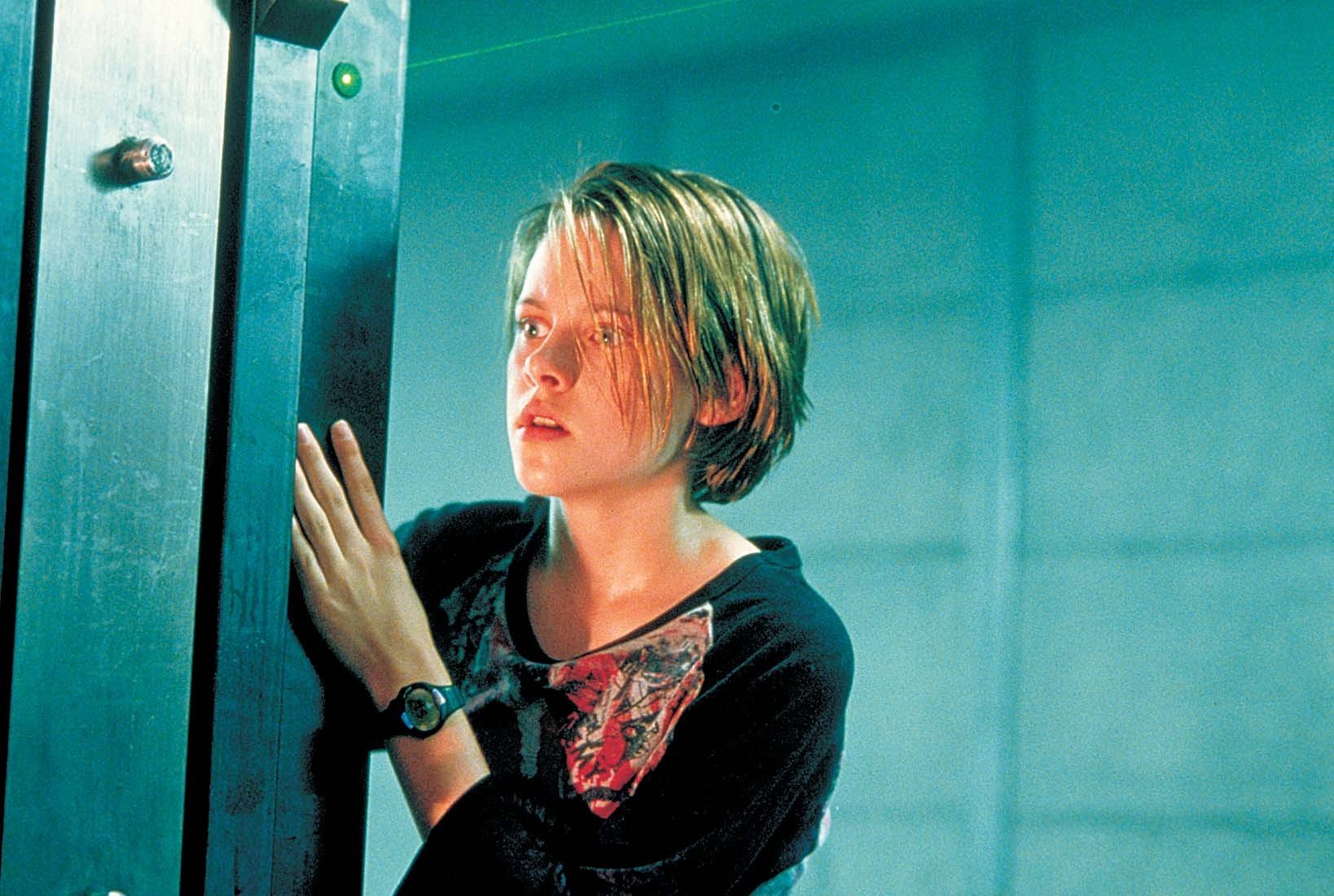
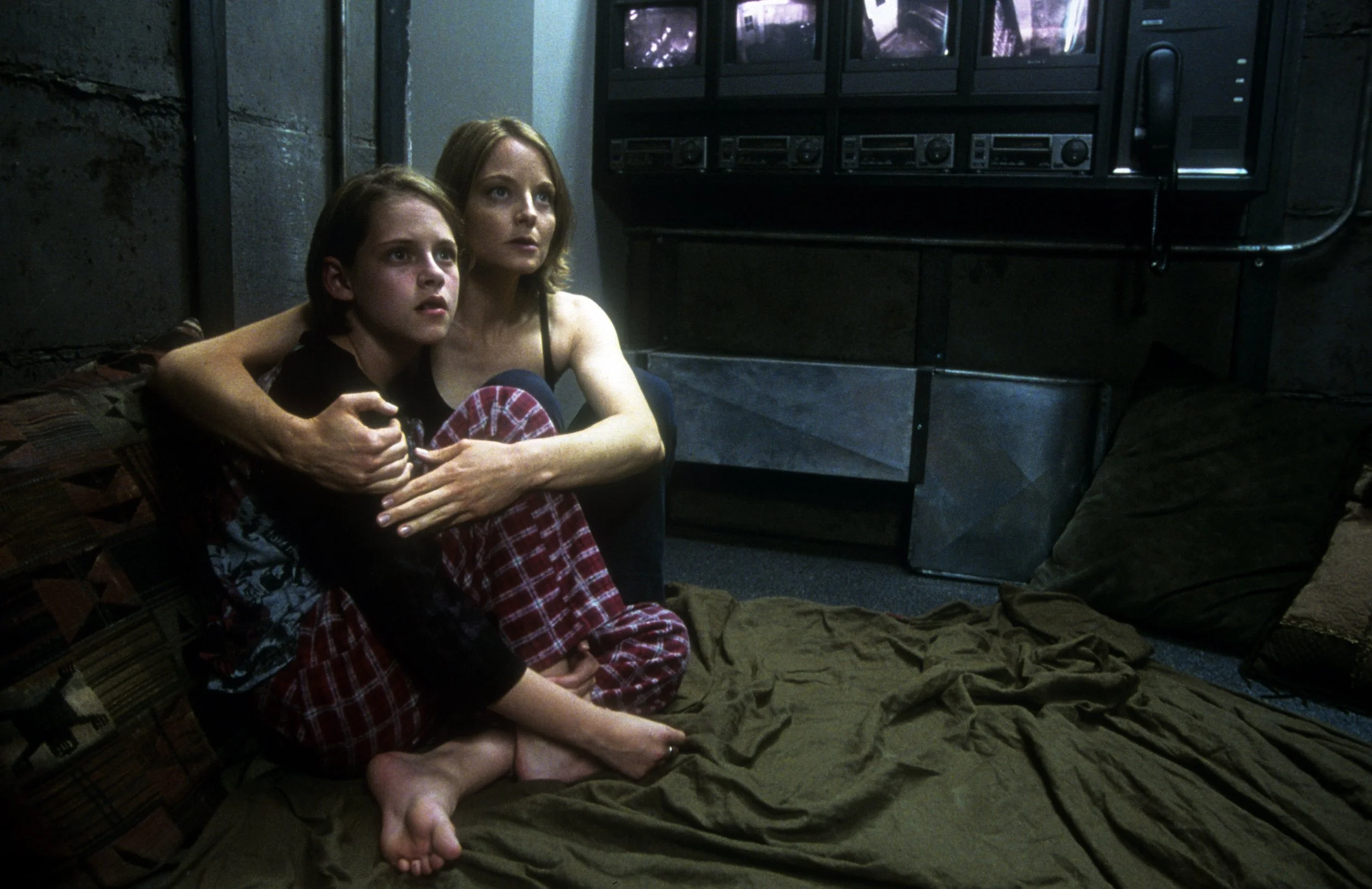
The early 2000s were very keen in the development of high concepts (e.g., a premise that is easily summarized in one sentence) into fully fledged (action) thrillers. “Phone Booth” (2002), “Cellular” (2004), Wes Craven’s “Red Eye” (2005) and “Panic Room” (2002) come to mind. Only in “Panic Room” though do you see a name synonymous with meticulousness (David Fincher) attached to the director’s chair. Following his much more ambitious and intellectually stimulating “Fight Club” (1999), which challenged mainstream culture due to its brave homoeroticism and anti-capitalistic message, Fincher fascinated by what the digital technology could do, makes “Panic Room” his most mainstream flick. With his tendencies of employing intricate ways to enhance a film visual’s subtly, this thriller boasts a unique identity both in its story and its presentation.
The subtleties of deep dramatic depth and psychological exploration on flawed characters though are abandoned to make way for something which aims to primarily entertain. Within 15 minutes, the action kicks in amidst an elaborate cat-and-mouse game between a mother, her daughter and three unwanted guests. David Koepp’s script (e.g., “Jurassic Park” (1993)) makes clever use of the central premise staging several set pieces where the invaders try to break in the concrete prison while the duo attempts to get help. However, electing to make the villainous trio one dimensional, bickering villains removes any tension, and the random injections of humour are surprisingly jarring considering the gravity of the situation. If you couple that with plenty of deus-ex-machina moments and plot contrivances, “Panic Room” and its story is what a film featuring the word panic in its title should not be: boring.
There is some overanalysis in this Fincher vehicle in regards a plethora of underlying topics (e.g., capitalism, techno-phobia, greed, feminism, gender roles) but these remain buried underneath pedestrian efforts of storytelling. The girl boss dynamic generated by the mother-daughter relationship (look for a super young Kristen Stewart, pre “Twilight” (2008) fame) is a welcome addition and Foster plays this meatless role like she is taking a walk in the park.
“Get the FUCK out of my house!”
Fincher seems more mesmerized though by the production design of the house - a character itself - showcasing the potential arenas for battle early during the opening. He orchestrates his shots with extreme precision utilizing the help of pre-vis to further accentuate the transitions between floors and rooms to a great effect; an unbroken take throughout the house when the invaders use several doors to get in is brilliant. Yet for all the visual panache (the cinematography is by Conrad Hall and Darius Khondji) thrown at the big screen, you can’t help but feel empty in all of this. Despite Foster cutting a believable hero back in the early 2000s where female leads in such movies could be counted in one hand, the villains are as interesting or scary as the panic room itself. The inclusion of the mysterious Raul does not lead to any suspense resulting in predictable outcomes. There are a handful of moments that manage to generate some thrills - particularly under a pre-“Lord of the Rings” (2001-2003) Howard Shore score, but these are diluted due to poorly written one-liners and thus, the sinister theme of home invasion is being glossed over as something to deal with contempt.
Still, “Panic Room” is a unique flick supported by Fincher’s skills to engulf interesting environments with his camera in an era where films sought to be different than their contemporary peers. If only the script’s purpose was to go balls out in its confrontation between residents and offenders as opposed to surrender itself to mainstream theatrics, this could have been an exquisite nail-biter.

+Slick direction
+Great production design
+Cinematography
+Some tension
+Interesting set pieces
-Villains
-Deus ex-machinas
-Humor
-Lack of suspense