
Batman Forever (1995)
-
Main Titles and Fanfare
The Perils of Gotham
Fledermausmarschmusik
Under the Top
Spank Me! Overture
-
Percussion: Timpani, suspended cymbal, water gong, rivet cymbal, bass drums, tam-tam, anvil, field drum, glockenspiel, chimes
Brass: French horns, trumpets, trombones, tuba, cimbasso
Woodwinds: Flutes, oboes, clarinets, bass clarinet, bassoon, contra-bassoon, saxophone
Strings: Violin, harp, violas, cellos, double basses
Vocals: Female solo vocals, Harmonic Voices (choir)
Keyboard: Piano, church organ
Electronics/synths: Theremin, synthesizer
Wind/reed instrument: Accordion

Ambitious and confusing
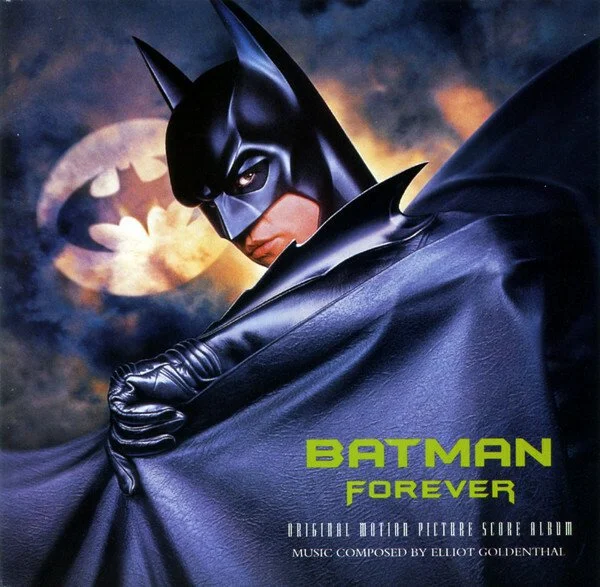
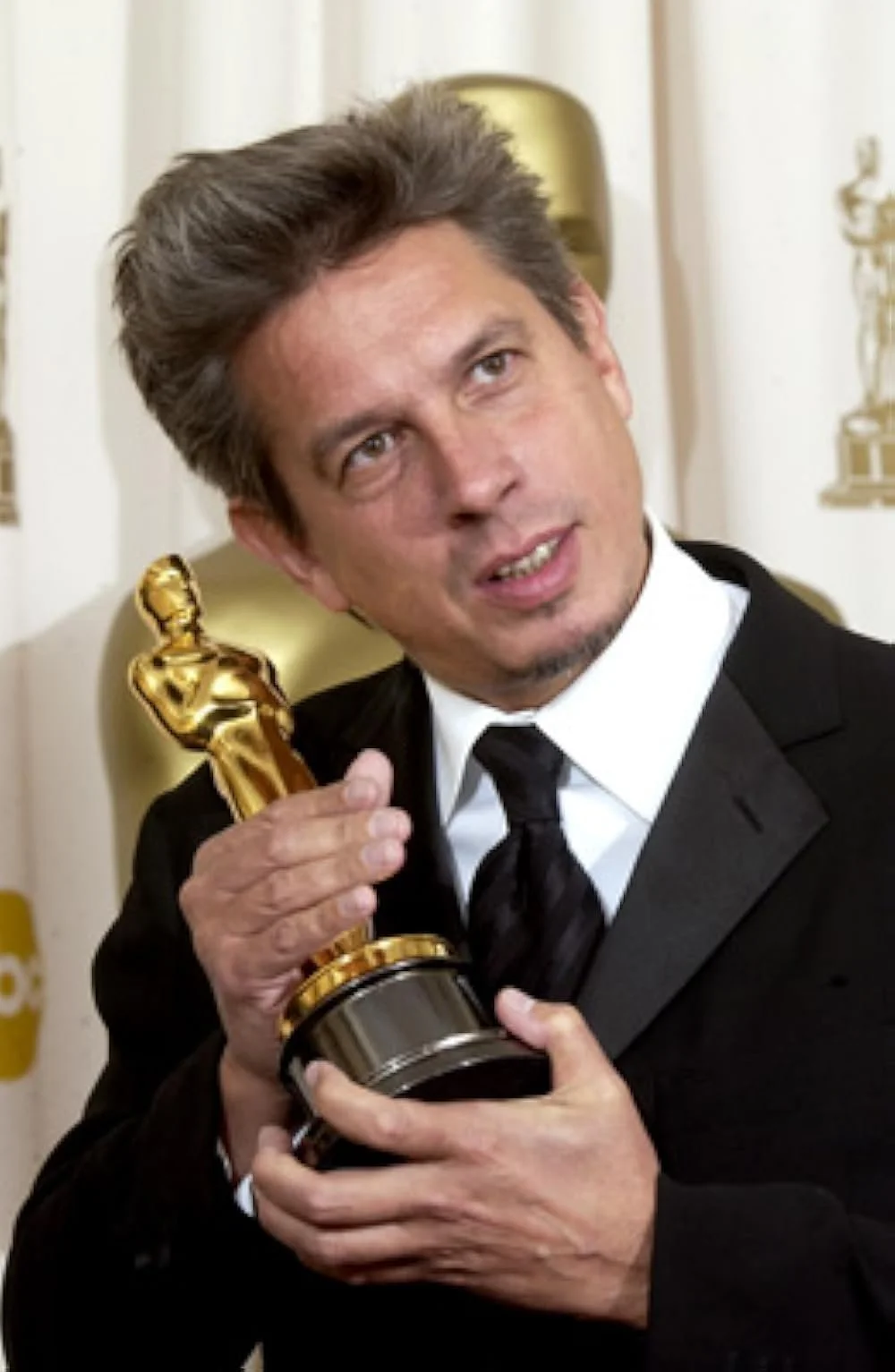
Coming after one of the best scores of Danny Elfman’s long career in Batman Returns (1992), the gifted Elliot Goldenthal had monumental shoes to fill. Not only was the threequel’s direction radically different from Tim Burton’s gothic take on the Dark Knight, Goldenthal had pressure to come up with his own standout theme. As such, he succeeds in conceiving a similarly dark motif although its nature is more anthemic and muscular. From the very first track (Main Titles and Fanfare), we have militaristic drums and swirling strings that reach a crescendo at 1:08 followed by discordant noises and a subtle choir, hints of complex things that will come later on.
Batman Forever as a whole album, though, has too many identities to juggle due to its plethora of characters. Major players such as Two-Face, Riddler, Chase Meridian, Batman, and Robin have their respective soundscapes which causes some sort of musical disintegration mirroring the film’s own tonal inconsistencies. The composer goes all out blending classic orchestra aspects (piano, strings, drums, choir), unique sounds (theremin, sound waves, saxophone, female vocal solos, metallic synths), and styles (jazz, boogie, tango, and waltz) to describe emotions, situations, heroes, and villains.
If Goldenthal’s work can be judged by that merge, then his attempt is a profound success. Clearly, the tapestry is bigger and more varied than Elfman’s more contained approach for sure. However, in his effort to tackle everything head on, he manages to create chaos. Take, for example, what he did for the Riddler. Nygma Variations - An Ode to Science is playful but not something easy to listen to. While the use of theremin is clever opting to bring out a 50s B-movie sci-fi vibe, at six minute long track exists solely as a match for Carrey’s manic energy through a combination of boogie, jazz, percussion, synth keys, muted trumpets, a solo violin, and female vocals. So let’s say that cohesion is not this score’s strongest suit. Only towards the end, the melody becomes operatic to allow the exploration of Nygma’s power grab, something which should have come way earlier.
This peculiar choice is expanded upon Gotham City Boogie and on Mr. E’s Dance Card (Rumba, Foxtrot, Waltz & Tango) where jazz, boogie, rumba, foxtrot, waltz, and tango (!) are all mixed together to generate an unconventional listening experience. For the former, things do improve at 1:13 but when a piano segment appears out of thin air, any goodwill quickly vaporizes. In the latter, Goldenthal continues to highlight the lighthearted feeling of director Joel Schumacher playing four different styles against each other simultaneously and the return of the violin solo from Ode to Science further enhances the listener’s distraction. The idea is there so perhaps in an alternative timeline, it would have been better to stick to one style to elevate the panache of the score.
In the action department, Goldenthal fares better. Whether Batman is fighting goons or villains, variations of the new theme can be heard under a few extra twists: pizzicatos (Fledermausmarschmusik, Descent), a faster tempo (Holy Rusted Metal), or a thunderous arrangement of cymbals, gongs, a church organ, and strings (Victory) are all spot on. In particular, the Spank me! Overture cue displays raw orchestral power with heavy militaristic percussion, maintaining a carnival aspect for Carrey’s wacky antics along with a brief percussion solo that is pretty spectacular.
A specific attribute of Goldenthal’s work is his ability to introduce new worlds musically through strong brass and lots of strings swirling (Demolition Man (1993), Final Fantasy: The Spirits Within (2001)). Consequently, he is able to capture a more vibrant Gotham City than Burton’s monochromatic metropolis. In The Perils of Gotham, the Two-Face motif appears after half a minute supported by brass and a wide scope even if its execution is a bit dull as it abruptly stops with screechy strings. Under the Top continues to employ moments of bombastic percussion and brass until the lighthearted strings for Robin make themselves known. A cute trumpet rendition of the Batman theme is nice before switching at 2:13 to a sizzling cluster of percussion, pizzicatos, and inquisitive strings, and subsequently to a pedal-to-the-metal moment of a brassy climax.
In other tracks, things are congested or out-of-place. Perpetuum Mobile might have too much stuff happening (trumpets, boogie strings, 40s style/electronic arcade sounds) and a loud jazzy finale of the kitsch variety. The interestingly titled Mouth to Mouth Nocturne boasts low cello/violin/viola notes to emphasize Bruce’s love interest. Yet it feels like it belongs to a completely different movie altogether.
Nevertheless, a handful of pieces do calm things down when the orchestra is not going overkill (Chase Noir, Pull of Regret, Chase Blanc, Two-Face Three Step). Of the four, Chase Blanc is the most forgettable in its simplicity. In Chase Noir, a saxophone and a subtle piano cover of Batman’s theme complement the femme fatale vibe the script aims for amidst all the drumming and metallic pounding. Pull of Regret at 1:57, reminds us Goldenthal’s dark and moody work on Alien 3 (1992) with the flutes invoking surreal disorientation and the underlying choir oozing a quiet menace. The Two-Face Three Step interestingly resembles Elfman’s score in its rhythm and melody giving it a catchy sense that is unavailable in the rest of the album.
This final track (Batterdammerung) describes the Riddler’s defeat. While it is appropriately busy in its strings and brass arrangements, you would think a longer cue ending with Batman’s identity would have closed effectively the album’s loop instead of posing as a major structural weakness.
Batman Forever has an overwhelming amount of instruments, rhythms, melodies, and sounds which boasts genuine skill in bringing all these elements together. Whether it is a pleasant experience or not, it is up to you. This does not detract from the fact that it is definitely one of the most memorable and ambitious scores of the 90s. Goldenthal goes ballistic in both good and bad ways in his larger-than-life compositions setting himself apart from Elfman’s oneiric (and iconic) scores of the first two movies. And for this reason alone, his own score has become a cult favorite.