
Lara Croft: Tomb Raider (2001)

-
Tomb Raider Main Titles
Home Invasion
Journey to Cambodia
Angor Wat
Siberia
Planetary Alignment
-
Percussion: Ethnic drums, chimes, bells
Brass: French horns, trombones, muted trumpets
Woodwinds: Shakuhachi, Duduk, Indian flute
Strings: Cello, violin, harp
Vocals: Metro Voices (portentous chants), London Oratory School Schola, throat singing, female solo vocals, male growling vocals
Keyboard: Piano
Electronics/synths: Electronic pulses, loud brash techno-style beats, metallic effects, layered synth textures

A mix of several styles
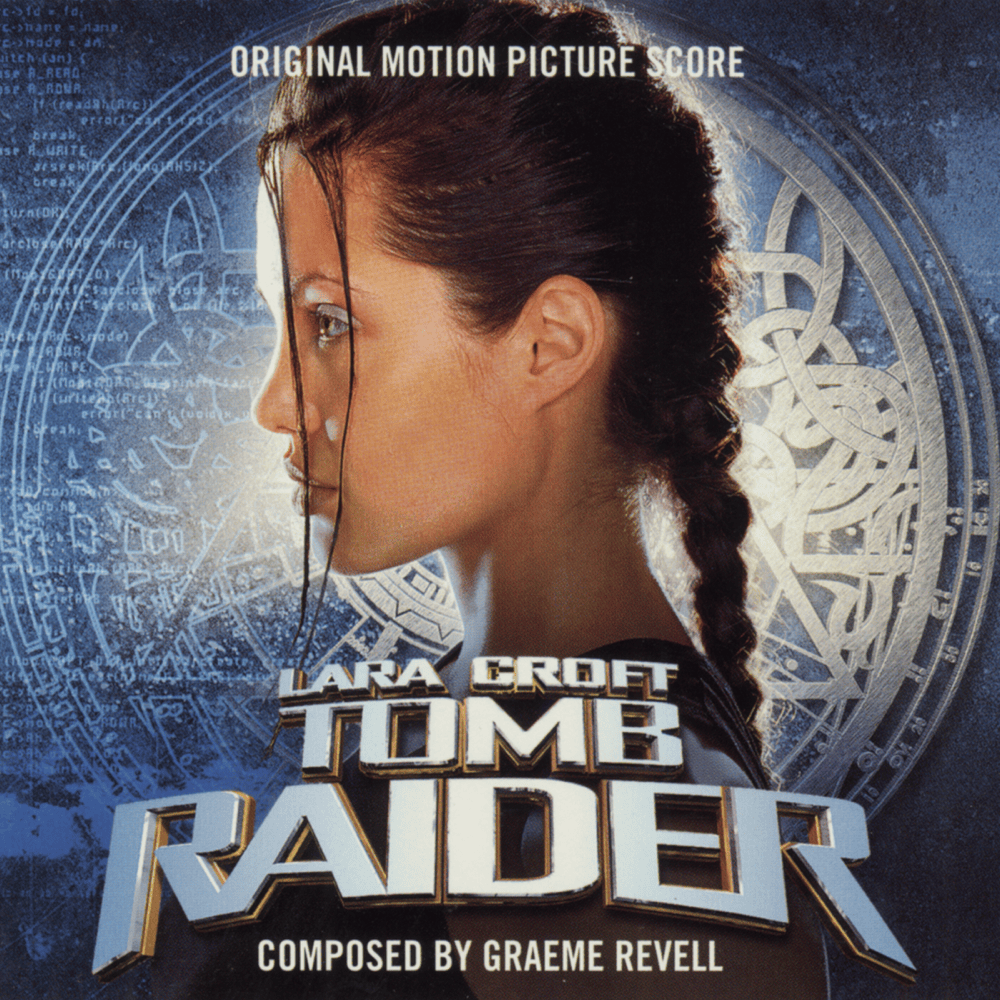
Lara Croft: Tomb Raider (2001) was a massively troubled production due to several script changes and ideas as to what the final product should be. Unfortunately for the movie’s sake, such issues infected other aspects like its scoring process.
Consequently, there had been multiple attempts at creating a musical landscape for Lara’s globe-trotting adventure and when time run out, the producers eventually hired Kiwi composer Graeme Revell to do the job. The problem was he had only two weeks (or less) to do something. Why he would accept this impossible task is anyone’s guess. Delivering anything at that point can only be marked as an achievement (and even the final printing had the wrong track listing!).
Lara Croft: Tomb Raider displays all the known elements of Revell’s career resembling strongly his work on The Crow (1994). However, unlike Proyas’ film where a distinct identity had been established, here melodies and lyrical cohesion are all but absent. Revell’s ideas are not bad or poorly executed. They just happen to be joined together to produce basic atmosphere and nothing else. Hence you won’t find a memorable heroic theme for Lara (as opposed to her male counterpart in Steven Spielberg’s Indiana Jones (1981-2008)). In most tracks, Revell uses a three layered approach: ethnic percussion and serene vocals ranging from whispers to growls, strings, and ambient synths/samples, supported by a few additional touches (e.g., Armenian duduk, Indian flute, harp, piano) (Tomb Raider Main Titles, Powell and the Illuminati, Lara Dreams of her Father, The Clock).
This extensive variety of sounds provides the score an edge among other contemporary ones. Yet, it grinds any momentum due to its persistence to describe action, mystery, and drama all at once. Although none of the cues are bad in their conception, they are in dire need of a strict re-arrangement to truly appreciate what Revell sought out to do in limited time. For example, The Clock boasts initially an appealing piano intro backed by strings until a minute in where the expected synths, whispers, and thunderous percussion take over leading to eventually nothing.
The album’s opening is solid. Tomb Raider Main Titles starts slowly with a mix of a three-note piano motif followed by a unique ethnic drumming segment (which can be heard also in Vangelis’ Alexander (2004) and in Alberto Iglesias’ The Constant Gardener (2005), a credit to Revell’s ability to put together unique sounds). A 50 member strong choir later gives it a majestic characterization at least and when the strings come into play, they exude dramatic heft. Right at the end though, Revell decides to stop in order to favor moody synths, growling vocals, and Indian flutes. They get the job done even if they remove the musical pacing.
Such a tactic can be risky resulting into a number of forgettable pieces. Lara Croft at Home has potential; a female vocal solo, a male chorus, a church bell, and lots of cellos do cater towards a grandiose feeling which is a sign of where things could have gone if Revell had more time. The same cannot be said for The Brahman, Alex West and Mr. Wilson, and The Letter. The first one is braindead due to its NIN-inspired, dated, and repetitive soundscape. Alex West and Mr. Wilson is clearly a filler track devoid of any sort of melody mimicking to the style of Powell and the Illuminati while The Letter features the opening theme but in a less intriguing version. Lara Battles the Stone Monkeys has a resemblance from Revell’s own work in The Crow: City of Angels (1996) in its simmering percussion, hectic string section, and a pseudo climax around 2:30 which bears some extra energy. However, it quickly finishes as it starts leaving no impact whatsoever.
Be that as it may, Revell is more successful when Lara is fending off goons (Home Invasion) or when she is travelling to exotic locations (Journey to Cambodia, Angkor Wat, Siberia). Home Invasion is catchy in its early 2000s brash techno-style beats especially at 1:30 and furthermore at 2:16. Journey to Cambodia - the most interesting cue here, keeps the combination of female vocals and electronic samples under a more consistent vibe in its placid Asian percussion and lovely chimes. Angkor Wat starts bombastically, and then bounces distractingly from ambience to percussion to ambience again showcasing different orchestrations almost per minute to amplify a feeling of ancient mystique. At 4:50, synths, vocals, a harp, and throat singing lead to a superb (albeit brief) moment before Revell launches to a drum pounding and string screeched crescendo. By the time we are in Siberia, Revell at least avoids employing the same instruments incorporating the main (if you call that) theme with a dash of Armenian duduk to keep things alive.
As for the final two tracks, they are a hit-and-miss. The Planetary Alignment has some throat singing in its intro and the choir oozes a sense of urgency. Revell implements the brass similarly to the way of Don Davis in the Matrix (1999). Yet, like everything else, it has to be combined with ticking effects from the unpleasant Brahman causing more headache than harmony. Which brings us to Lara Defeats Powell, an abrupt stop for the album. Named after the chief antagonist who lacks a musical identity, it bears a strange piano motif resembling Marco Beltrami’s take in Scream (1996) before ending in forgettable string style fashion.
Lara Croft: Tomb Raider has lots of ups and downs. For every good idea, there is a shoddy execution that denigrates any impact on the listening experience. It is by no means a bad score considering the mountain of effort Revell made to deliver something (or anything). The sound is there, and a basic understanding of capturing a mystical state of mind is being conveyed successfully in its extensive usage of a plethora of musical instruments that made good use of a surround system. If it had proper themes and different arrangements that do not jump from one style to another, this could have been something truly special to listen to.