
Conan the Barbarian (1982)
-
Anvil of Crom
Riddle of Steel/Riders of Doom
The Gift of Fury
Wifeing
Recovery
The Funeral Pyre
Battle of the Mounds
Orphans of Doom/The Awakening
-
Percussion: Japanese war drum, timpani, bass drum, metal sheet, hard mallet, celesta, tom-tom
Brass: French horn, English horn, trumpet
Woodwinds: Oboe, flute
Strings: Cello, violin, cimbalom, harp
Vocals: Male/female choir

One of the best fantasy scores in history
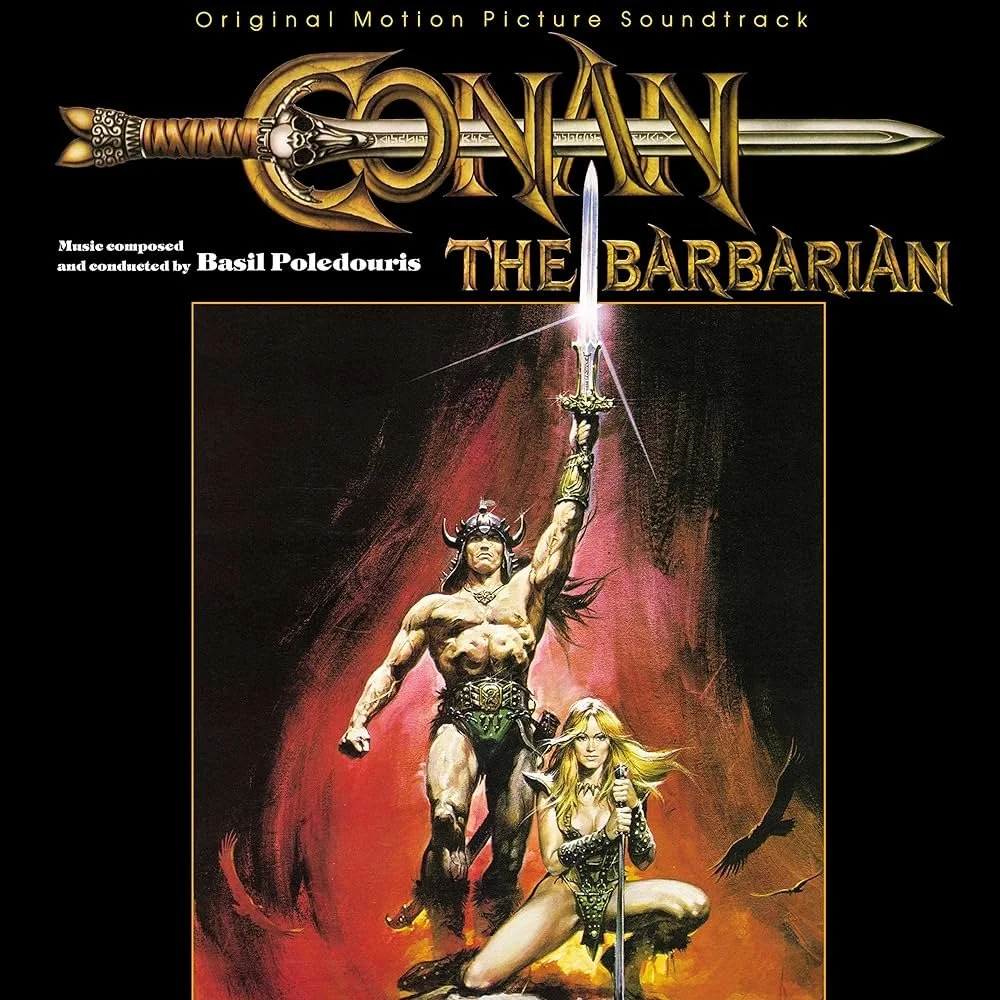
When Conan the Barbarian (1982) was released, expectations were pretty low. Producers had issues with Arnie’s accent, the source material was pulp, and the world building required a bit of budget. Since then, though, Arnold became an icon, and Conan the Barbarian written by Oliver Stone (!) and John Milius (who also directed it) boasted genuine dramatic heft and well-developed characters that elevated this granddaddy of sword-and-sorcery to cinematic legend. Its most memorable element, however, was Basil Poledouris’ monumental orchestral score. Considering how little dialogue the movie has (Milius envisioned the film as an opera with almost no lines), it is up to the music to do all the storytelling. The director wanted to use Carl Orff’s Carmina Burana but since the piece was already in play in Excalibur (1981), Poledouris had to conjure up something else to convey a world of sorcery and violence. Retrospectively speaking, the album as a whole is one of the best written soundtracks in history with few being able to match its mesmerizing power. Poledouris’ work here laid the blueprint for the genre and plenty have followed it to the letter (see Howard Shore’s take on The Lord of the Rings (2001-2003) trilogy).
Shying away from traditional (and more cheerful) heroic aspects experienced, for example, in Star Wars (1977), Basil goes more meaty and complex in his compositions by employing a 90-instrument orchestra and a 24-member choir. He crafts several harmonic themes enlisting strong brass, percussion (which are the driving force of the score), strings, oboes, and a male-dominated choir.
One of the standouts is Conan’s own musical identity (Anvil of Crom) supported by 24 French horns (!) and thunderous percussion. Halfway through a shift occurs where strings are being introduced to give us one of the most beautiful representations of heroism. This theme is so good Poledouris keeps finding ways to sprinkle it throughout the album with different (e.g., oboes, female-based choir) rearrangements (Recovery, Riders of Doom) often interplaying it against another cue, the one of love (Wifeing). Whether we hear strings, oboes, or flutes, the effect of the melody is all the same due to the composer’s ability to create a sweeping landscape of loyalty, passion, and sometimes, tragedy (The Funeral Pyre, Recovery). For example in The Funeral Pyre, Conan’s cue is being rearranged to bear a sadder quality; its lingering string work overlaps with the Love Theme, generating a sincere moment of emotional catharsis and character development for the muscled protagonist.
Riders of Doom is by far the one track propelling Conan the Barbarian’s soundtrack the most to pop culture immortality. Opening slowly under an almost oneiric quality, it quickly descends into a pulse-pounding piece of bombastic percussion, superb brass, and a Latin chorus of grandeur that feels darker sound-wise than contemporary movies of similar material. If brutality and the horror of pillaging can be described musically, Poledouris gets A+. This particular piece appears two more times (The Kitchen/The Orgy (slightly less hectic), Battle of the Mounds) although the extra interesting percussion layer at 4:25 piercing through the choir’s chant is listed only here.
Throughout the score, however, things get quite lush especially in tracks featuring heavy string arrangements. Cues like Atlantean Sword, Leaving/The Search, The Tree of Woe, Funeral Pyre, and the playful Civilization/Theology (this has a similar identity to Howard Shore’s Concerning Hobbits) all excel at presenting distinct identities which complement the aforementioned themes. The composer also employs a rambling crescendo of drumming to instill fatal or emotional outcomes in this world (The Gift of Fury, The Funeral Pyre, Death of Rexor). Other notable unique sounds can be found in the Wheel of Pain (e.g., grinding metal against each other) for the Sisyphean montage of Conan’s growth reaching a peak (around 3:05) that celebrates the beginning of his adult life.
By the time we reach the third from last track, Battle of the Mounds, we have gone a full loop: strings, percussion, and extensive cymbal usage are the appetizers offering some space for an early flute section before returning to a swirling string moment for Conan’s plea to Crom. What follows is simply sensational. A big choral opening at 1:55 elevates one’s emotional state proclaiming that if cinematic heroism had a sound, this is definitely it. It then seamlessly transitions into the same rendition of Riders of Doom, reminding us just how superb this passage is: bombastic, thrilling, and captivating.
After such exquisite display of magnificent orchestration and powerful chorus, you might think that anything afterwards would be a letdown. Yet, Poledouris returns to supremely crafted harmonies. Death of Rexor enters into similar territory heard in The Gift of Fury for Thulsa Doom’s chorus-based theme of enchantment albeit in a faster tempo. However, it is Orphans of Doom with its brilliant lamenting quality that seals the deal closing the album not in a celebration of heroism but on a mournful contemplation. The use of harp and female vocals invokes real sadness as opposed to aspirations of a happy ending and only at 4:47 Conan’s Odyssey begins anew in an uplifting tone.
Conan the Barbarian is not only one of the best 80s film scores but one of the best of all time. Without sounding outdated, its reliance on powerful melodies and excellent orchestra performance to depict sword-and-sorcery shenanigans is to be commended. Get your hands on a remastered version to do justice to what Poledouris put together.