
Director: Simon McQuoid
Starring: Karl Urban, Adeline Rudolf, Martyn Ford, Jessica McNamee
Primary genre: Martial arts
Secondary genre: Fantasy
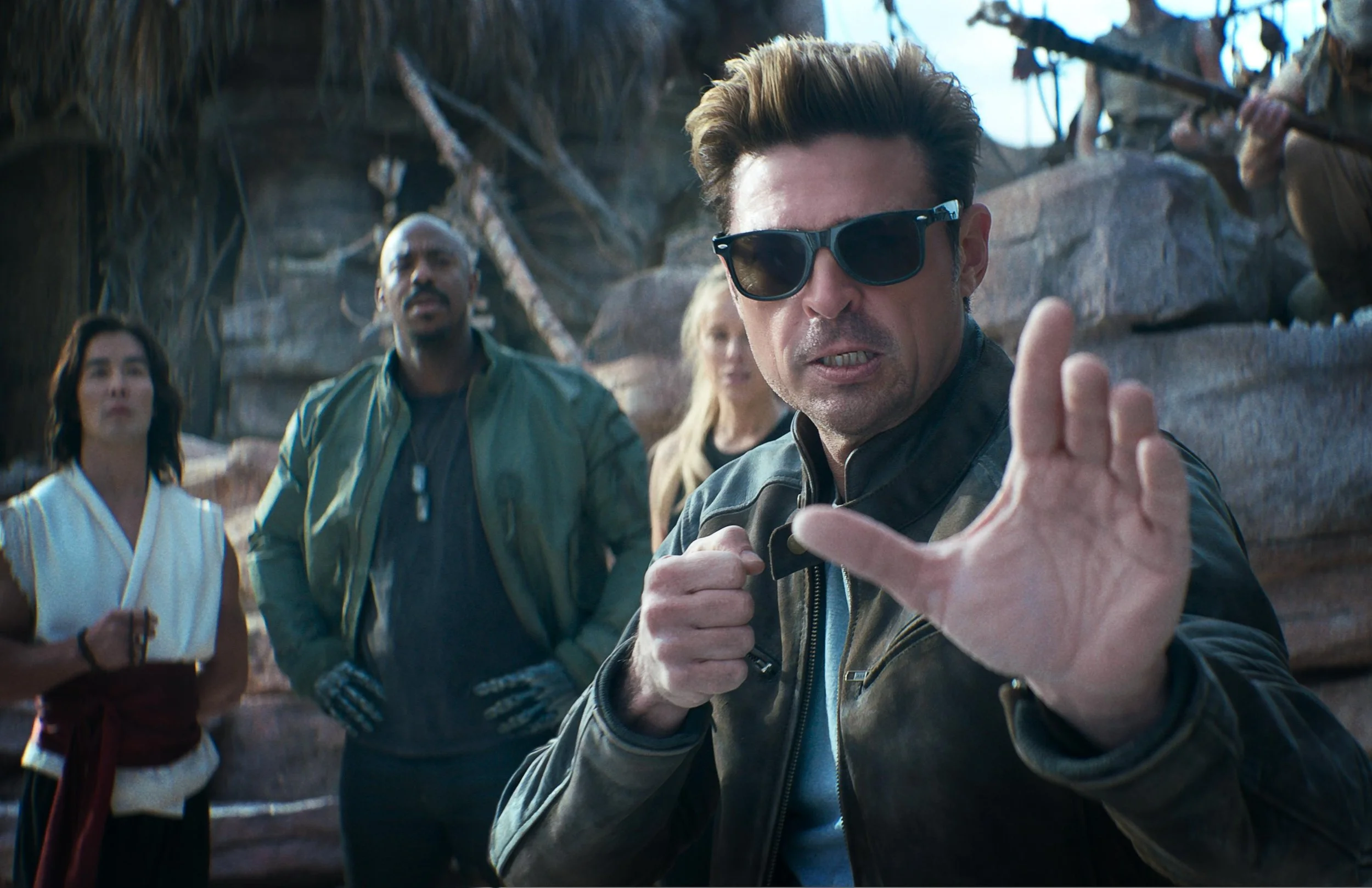
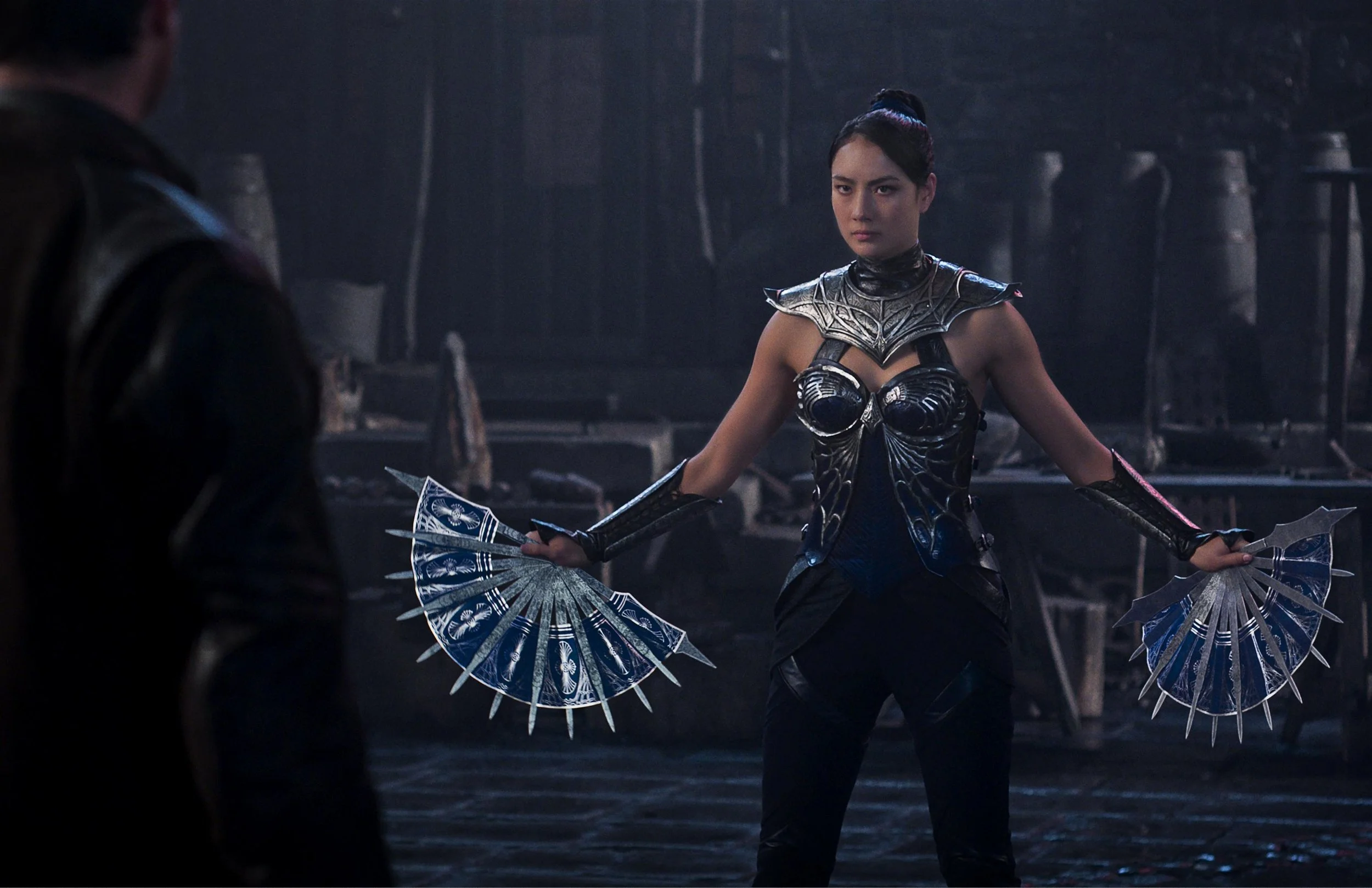
The relative success of Mortal Kombat (2021) was certain to lead to a bigger sequel. However, bigger does not necessarily mean better and Mortal Kombat 2 is still plagued by the same serious issues of its predecessor. Incorporating elements and characters from the first three games and the franchise’s own reboot in 2011, we now have not only the infamous tournament but also deadly revenants, Shao Kahn’s big bad, and some irrelevant talk about Shinnok’s amulet. All of the above are delivered under heavy exposition, subpar acting, and cliche dialogue for our second fish-out-of-the-water fighter.
Enter fan favorite Johnny Cage who was cut from the first movie due to being considered toxic by the filmmakers despite his character having the appropriate cinematic charisma. Cage is a cocky, extremely good looking, womanizing, and witty individual who becomes selfless in his Mortal Kombat journey. So why he is portrayed here as a washed-up actor played by the miscast 53-year-old Karl Urban (who clearly is not up for the martial art sequences) is beyond anyone’s guess. His efforts to generate the same tongue-in-cheek humor that the original’s Johnny Cage (played by Linden Ashby) delivered fall flat and bend the movie’s overly serious tone.
“ I’m warning you. I got a Saturn Award for Best Fight in a Feature Film, so don’t mess with me.”
Keen to progress with the tournament and its nasty fatalities results in a Mortal Kombat: Annihilation (1997) syndrome where too many characters are shoehorned purely for fan service or to fill in an action scene of bare minimum standards. Liu Kang (who should be the central hero of the franchise), Sonya, Jax, or even Cole don’t have any arcs while important players are reduced to just a handful of lines. Thus, the proceedings are split between Cage finding his inner power supremo and Kitana’s effort to reclaim Edenia which later dominates the main storyline - a clear switcheroo. Nevertheless, none of the above is thrilling or engaging simply because everything feels so soulless.
This sequel lacks the visual panache the original 1995 flick had, replacing practical sets, exotic locations, and supernatural atmosphere with green screen and an unimaginative production design. The reason why the cult-classic has not faded from the people’s radars resides within its on screen depiction of Outworld. Here $68 million gets you Photoshop-level special effects, obvious soundstages, colorless cinematography, and cheap cosplay costumes missing a much needed scope to make the story fly; we hear about Shao Kahn’s empire but we never see it. Instead we spend most of the time inside a castle and the world’s smallest public square bearing none of the vivid details seen in the games’ environments. For all the talk of NetherRealm, invasions, and Elder Gods, the world in the sequel feels even smaller in scale echoing a similar vibe in The Matrix Resurrections (2021).
For a film with Kombat in its title, at least it delivers on that front. If quantity was a metric for success though, McQuoid’s sequel would get A for effort. If you are satisfied with Netflix level choreography, digi doubles, circular camera moves, and bodies which don’t look the part, then you are in for a treat. The fights are average at best, deprived of the visceral stuntwork seen in contemporaries like John Wick (2014-2023) or Havoc (2025). Only a face off between Liu Kang and Kung Lao is inventive while Martyn Ford’s towering (and CGI rendered) Kahn, who gets the lion’s share in fighting has some momentum bringing forward some of the games’ aesthetics. The rest are forgettable stuff really and Benjamin Wallfisch’s work is one of the most forgettable scores in recent blockbusters; no themes, no melodies, just plain digital noise.
Mortal Kombat II is not as bad as its 2021 predecessor earning a marginal pass. It continues to take itself too seriously draining its OTT material to an asphyxiating degree. The 1995 movie understood the assignment right from its legendary opening credits while this one struggles to find any real footing and dramatic stakes. And not using Techno Syndrome’s all-time-classic theme (again) is a crime against humanity.

Still not a flawless victory
+Marty Ford has presence
+Liu Kang/Kung Lao fight
+Adeline Rudolf is a great Kitana
-Terrible music
-Banal fights
-Poorly rendered special effects
-Too many characters